Subchapter M is now a paperwork test and an operating test
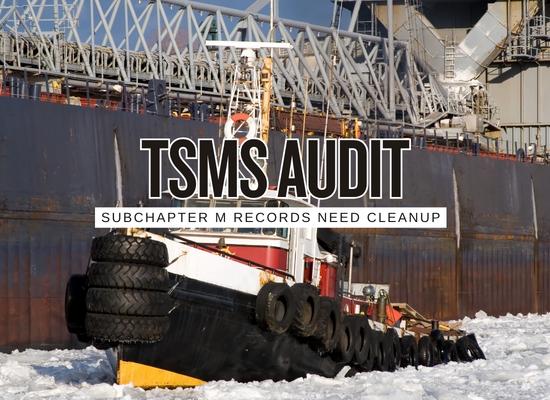
I would treat the 2026 Coast Guard guidance update as a reminder that the TSMS option lives or dies by evidence. The vessel may look compliant at the dock, but the records, audits, corrective actions, training files, survey notes, and onboard procedures have to tell the same story.
The updated inspection guidance clarifies the inspection, certification, and deficiency process for TSMS-option vessels. It also folds deficiency recording and reporting guidance into the current work instruction and moves TPO guidance into the newer work-instruction format. That makes 2026 a good year to audit the weak seams between company policy, vessel practice, TPO records, and Coast Guard inspection evidence.
Sources: USCG Maritime Commons 2026 update, CVC-WI-013(8), 46 CFR 138.220 TSMS elements, 46 CFR 138.310 internal audits, 46 CFR 138.315 external audits, 46 CFR 137.220 TSMS option scope, 46 CFR 137.315 internal survey program, USCG Subchapter M TPOs.
The new practical audit question
The TSMS option gives tug operators a management-system path to Subchapter M compliance, but it also creates a simple risk: the Coast Guard, the TPO, the office, and the vessel may all be looking at different pieces of evidence. The 2026 update is a strong reason to reconcile those files before the next inspection, renewal, audit, or survey event.
A good 2026 audit should not only ask whether the operator has a procedure. It should ask whether the procedure is current, assigned to a responsible person, understood onboard, supported by records, linked to corrective action, and proven by vessel-level evidence.
2026 audit board
| Audit lane | TSMS risk | Evidence to pull | 2026 operator action |
|---|---|---|---|
| Office file | Procedures exist, but ownership, due dates, and corrective-action records are weak. | TSMS manual, responsibility matrix, designated person file, audit schedule, corrective-action register. | Reconcile management responsibility with actual people and current fleet structure. |
| Vessel file | Crew has outdated procedures or missing records onboard. | COI, TSMS certificate copy, TVR or log records, training records, equipment checks, emergency drills. | Verify the onboard file against the office-controlled document list. |
| Audit file | Internal and external audits are not clearly documented across the certificate cycle. | Internal audit records, external audit reports, vessel selection schedule, auditor qualifications. | Build a single audit clock showing management and vessel coverage. |
| Survey file | Drydock, internal structural, or survey evidence is incomplete or hard to defend. | Survey reports, photos, repair invoices, deficiency closeout, OCMI or TPO notices, objective evidence. | Create vessel-by-vessel survey evidence folders before the next renewal pressure point. |
| Equipment file | Fire, lifesaving, navigation, electrical, machinery, and towing gear records do not match actual condition. | Inspection sheets, service tags, test reports, repair logs, crew reports, deficiency register. | Prioritize safety-critical systems and verify correction, not just inspection date. |
10 TSMS deficiencies to audit before the next inspection
Deficiency and non-conformity confusion
A common TSMS problem is mixing equipment deficiencies, procedural non-conformities, major non-conformities, and unsafe conditions into one vague list. The 2026 update makes deficiency handling a good first audit target because reporting language and closeout evidence need to be clean.
Internal audit independence gaps
Internal audits need qualified auditors and documented results. Operators should confirm the auditor is not the same person responsible for TSMS development or implementation, and that audit records show implementation across management and vessels.
External audit clock drift
External audits have certificate-cycle timing rules and vessel coverage requirements. Operators should check that vessels covered by the TSMS certificate are being selected and visited in a way that is defensible across the certificate period.
Survey evidence without objective proof
Internal survey programs need more than “survey complete” notes. Drydock and internal structural examination files should show objective evidence, including photos, repair records, measurement notes, deficiency correction, and required notifications.
Master authority and designated person files out of date
The TSMS must document management responsibilities, designated shoreside persons, maintenance responsibility, emergency assistance responsibility, and the master’s authority to stop operations when an unsafe condition exists.
Crew training records that do not match assignments
Training records should show new-hire orientation, TSMS duties, operational duties, emergency procedures, occupational health, crew safety, and training required by Subchapter M. The file should make sense for the vessel, route, crew role, and emergency duties.
Fire protection inspection and drill gaps
Vessel examinations include fire protection equipment, required inspection, testing, maintenance, and training. Operators should check tags, test reports, crew training, fixed systems, portable extinguishers, pumps, hoses, alarms, and closeout of defects.
Towing gear inspection records too thin
The examination scope includes deck machinery, controls, guards, alarms, safety features, hawsers, wires, bridles, push gear, and related fittings. A simple “gear checked” box may not be enough if there is visible wear, missing documentation, or repeated rope damage.
Logs and recordkeeping not aligned with the TSMS
Vessel personnel review includes manning in accordance with the COI, vessel logs and records maintained under applicable regulations and the TSMS, crew safety, personnel health, and required training. This is where a good operating vessel can still fail the paper trail.
Onboard procedures that do not match the vessel
A TSMS may be companywide, but each vessel still needs procedures that fit its equipment, route, crew, emergency gear, towing arrangement, machinery, navigation systems, and COI. Old generic procedures can create findings when the vessel has changed or the crew does not recognize the document.
The sharper way to audit TSMS in 2026
Do not audit the manual by page count. Audit it by traceability. Pick one deficiency, one repair, one drill, one crew change, one survey, and one maintenance item, then trace each from vessel report to office action to closeout evidence.
Deficiency severity map
| Finding type | Early signal | Office reaction | Vessel reaction | Closeout evidence |
|---|---|---|---|---|
| Record gap | Missing log, unsigned form, outdated procedure, incomplete drill note. | Correct document control and retrain the responsible person. | Update onboard copy, fill missing fields if allowed, and explain new record habit. | Corrected record, revision log, training note, supervisor verification. |
| Equipment deficiency | Failed test, expired item, worn tow gear, missing guard, defective alarm. | Assign repair, evaluate risk, track parts and determine operating limitation. | Tag, isolate, repair, replace, or remove from service as appropriate. | Repair invoice, photo, test result, crew signoff, deficiency closeout. |
| Procedure failure | Crew cannot execute the written procedure or the procedure no longer matches the vessel. | Revise procedure and retrain affected personnel. | Run a drill or tabletop to confirm the procedure works onboard. | Revised procedure, training record, drill record, management review. |
| System breakdown | Repeated findings, missed closeouts, no owner, no due date, weak verification. | Escalate to management and correct the TSMS process itself. | Verify vessel crew understands the reporting and correction path. | Root-cause file, corrective-action plan, effectiveness check, audit note. |
Fleet priority lanes
Small operator with a few tugs
Record discipline Auditor independence Onboard copiesThe risk is usually concentration. One person may own too many TSMS tasks, creating weak independence, incomplete closeout, and informal record habits.
Multi-port fleet
Document control Vessel variation Audit clockThe risk is drift. Procedures may be current at headquarters but outdated on vessels, while audit and survey coverage becomes hard to track across ports.
High-utilization harbor fleet
Maintenance backlog Crew turnover Training proofThe risk is speed. Busy vessels can keep working while small record gaps, deferred repairs, and incomplete training files accumulate.
Operators nearing COI renewal
Survey evidence Deficiency closeout TPO coordinationThe risk is timing. A weak survey file or unresolved deficiency can become expensive when the renewal schedule is already tight.
TSMS deficiency pressure checker
Use this planning tool to estimate which part of a TSMS-option towing operation deserves the next audit push.