Low load can be the dirtiest part of the workday
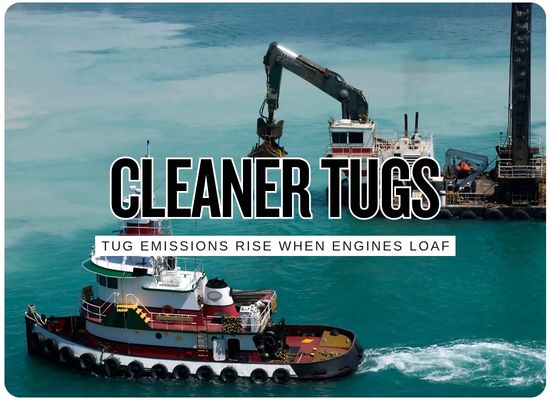
A tug can look clean on a spec sheet and still run ugly in the parts of the day nobody brags about: waiting, creeping, lining up, throttling in and out, then sitting again with big diesel machinery lightly loaded.
g/kWh NOx range reported in recent real-world tug maneuver testing.
g/kWh CO range reported, with CO rising in low-load and transient operation.
Peak-power time for harbor-assist and escort tugs cited in MARAD guidance.
Potential PM and NOx reduction range EPA highlights from newer marine engine standards when fully implemented.
Sources: Real-world harbor tug emission measurements, Real-world SCR impact on tugboats, EPA harbor craft best practices, MARAD energy efficiency guidance, Caterpillar hybrid tug operating profile.
The tug cycle that creates the problem
Low-load emissions map
| Operating condition | Main issue | Emission signal | Better control lever |
|---|---|---|---|
| Idle or standby | Large engines running for readiness instead of work. | Fuel is burned close to shore with limited useful output. | Shore power, auto shutdown, battery standby, auxiliary optimization. |
| Low-speed transit | Engines operate below their efficient load band. | CO and soot risk can rise from incomplete combustion. | Hybrid mode, smaller gensets, route timing, engine-load management. |
| Transient assist | Fast load changes during docking, braking and repositioning. | Standard steady-state factors can miss real maneuver behavior. | PEMS testing, load-profile data, smarter emissions inventory methods. |
| Cool exhaust | Aftertreatment may not stay in its strongest operating window. | SCR performance can be challenged at low temperature or transient load. | Temperature management, right-sized engines, hybrid controls, duty-cycle review. |
| Old engine hours | Older engines accumulate many local service hours near port communities. | NOx, PM, CO and diesel exhaust exposure remain a waterfront concern. | Repower, retrofit, Tier strategy, DPF/SCR review, electrification where practical. |
The false comfort of low fuel burn
Low load may burn less fuel per hour, but the tug may spend a huge share of the day there. If combustion is poor or aftertreatment is cool, the port can get more local pollution than the fuel ticket suggests.
Operator actions that matter first
Low-load emissions pressure tool
This simple model shows whether a tug’s daily profile is likely creating a low-load emissions problem worth measuring.