Tug Industry Report
The right tug is not the one with the biggest number. It is the one whose pull matches the ship, the port, and the duty.
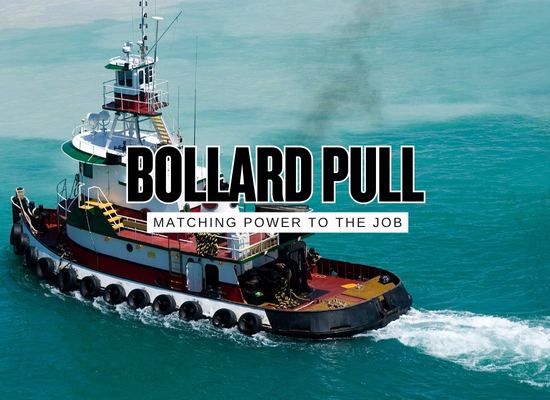
Bollard pull is still the starting point for tug power, but serious tug matching depends on far more than static pull alone. Vessel size, port layout, windage, channel risk, and escort duties all change what “enough power” really means.
The simple definition that still needs context
Bollard pull is the static pulling force a tug can generate, usually measured while secured to a fixed bollard. It is useful because it gives a common baseline for comparing tug strength. But it is only a baseline. In real towage, the tug is not working in a laboratory condition. It is dealing with moving ships, currents, wind, changing towline angles, confined water, berth geometry, and sometimes escort work at speed.
That is why two tugs with similar bollard pull may perform very differently in practice. A harbor tug, an escort tug, and a compact ASD tug can all carry impressive numbers, but they do not deliver the same working effect in the same port situation.
The fast rule
Matching bollard pull well means answering three questions at once.
1️⃣ How large and wind-sensitive are the ships
2️⃣ How demanding is the port layout and approach
3️⃣ Is the tug doing ordinary harbor assist or real escort work
Static pull is only the first layer
In basic ship assist, bollard pull helps define whether the tug has enough muscle. In escort work, the conversation quickly moves beyond static pull into indirect forces, towline angles, steering effect, braking effect, skeg design, and speed-related performance.
1️⃣ Vessel size matters, but windage often matters just as much
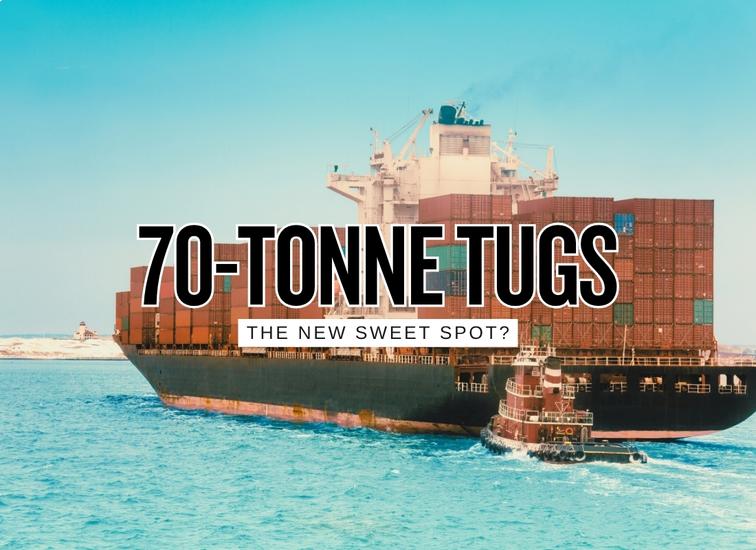
Bigger vessels generally need stronger tug support, but length overall is not the whole story. High-sided containerships, LNG carriers, car carriers, and other wind-sensitive ships can demand more effective tug control than a simple size comparison suggests. In exposed ports, wind and current can push the tug requirement upward faster than tonnage alone would imply.
That means matching bollard pull to ship size is only safe if the operator also looks at the ship’s profile above the water and the environmental conditions around the berth or channel.
2️⃣ Port layout can change the tug requirement more than people expect
A simple open berth is one thing. A narrow turning basin, current across the berth, short approach, bridge constraint, tidal stream, or exposed terminal is another. The same ship may be easy to handle in one port and much harder in another.
This is why ports do not really buy bollard pull in isolation. They buy enough control for their own geometry and operating risk.
3️⃣ Harbor assist and escort duties should never be read the same way
For ordinary harbor assisting, bollard pull is a straightforward strength reference. For escort work, it becomes only part of the picture. Escort-towage guidance shows that a tug on a towline at angle can generate forces well beyond simple straight-line bollard pull, depending on hull and skeg behavior, speed, and towline geometry.
In other words, a tug with strong escort design can deliver more operational control than a static bollard-pull number alone suggests, while a tug with a good static number but weaker escort geometry may disappoint in the real job.
4️⃣ Hull form and skeg design can make similar numbers behave very differently
Builders such as Robert Allan and Damen both make clear, in different ways, that tug effectiveness depends on more than power. Escort-specific hulls and skegs are built to create useful steering and braking forces, while compact harbor ASD designs focus on maneuverability and multi-purpose ship assist. Two tugs can sit close together on a bollard-pull chart and still have very different strengths in actual service.
5️⃣ Compact ports and shallow areas can reward the right smaller tug
Bigger is not always better. Some ports need compact dimensions, shallow draft, sharp maneuverability, and enough pull for their ship mix rather than a large tug with headline power. Damen’s smaller ASD range shows that compact tugs around the 30 to 50 tonne class can still be highly useful when the port geometry and vessel profile fit that range.
That means owners should resist treating bollard pull like a simple arms race. Too much tug for the actual port can become a capital and operating burden rather than an advantage.
6️⃣ Terminal type can move the target upward quickly
LNG terminals, exposed offshore terminals, petrochemical berths, and larger container hubs often need more from a tug than a routine berth move in a protected harbor. Escort-focused designs now commonly sit in the 70 to 120 tonne band for these kinds of roles, especially when steering and braking performance at speed are part of the requirement.
That does not mean every terminal needs the top end of that range. It means the duty profile changes the meaning of “enough.”
7️⃣ Tow gear and line forces matter almost as much as the tug itself
Bollard pull can create false confidence if buyers ignore the towing winch, deck fittings, line handling, and escort system limits. Escort-towage material shows that deck forces can exceed simple static pull depending on towline angle and operating method. That makes tow gear selection central to the overall power match.
A tug is only as useful as the whole towing system allows it to be under real service loads.
8️⃣ Matching power well can improve both utilization and contract strength
A tug that is underpowered for the local ship mix risks weak service, operational strain, and commercial doubt. A tug that is overpowered for the work can become expensive dead weight. Matching bollard pull accurately improves fleet economics because the tug is more likely to fit daily jobs, future contracts, and redeployment options.
This is one reason owners increasingly treat bollard pull as part of fleet strategy rather than just a specification line.
Closing view
Bollard pull is still one of the best starting points in tug matching. It just stops being enough the moment the real job includes large windage, tight port geometry, or escort demands at speed.