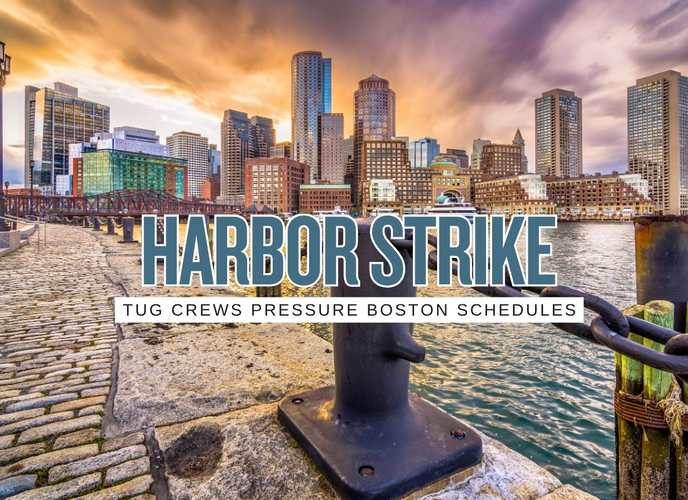
Tug crews strike as tall ship traffic nears Boston Harbor
Teamsters Local 25 members at Boston Tow remain on strike during a high-visibility week for the harbor, with contract negotiations centered on wages, retirement benefits, and working conditions. The dispute involves tugboat engineers, mechanics, and operators whose work supports vessel movement through Boston Harbor.
Operator Impact Snapshot
Local coverage describes roughly 23 engineers, mechanics, and trained operators involved in the Boston Tow strike.
The strike was reported as entering a sixth consecutive day as negotiations continued.
Sail Boston’s official event schedule begins with the Parade of Sail on July 11.
The official Sail Boston event window runs through July 16.
Sources: Boston 25 News, CBS Boston, Sail Boston, Sail Boston schedule.
Current operating picture
The dispute is centered on Boston Tow workers represented by Teamsters Local 25. Local reporting has described the workers as engineers, mechanics, and trained operators who support commercial vessel movements in Boston Harbor. The strike is unfolding during a compressed event window because Sail Boston is scheduled to bring tall ships and naval vessels into the harbor, with public viewing and boarding planned after the Parade of Sail.
Commercial signal
The strike highlights how quickly a small specialized workforce can become a high-impact waterfront issue. Tug labor is not always visible to the public, but harbor events, cargo movements, fuel logistics, and ship-assist operations all depend on trained crews being available at the right time.
| Stakeholder | Near-term concern | Operational exposure | Status to monitor |
|---|---|---|---|
| Tug operators | Relief coverage, dispatch reliability, crew availability, and contract continuity. | Higher pressure if event movements and commercial traffic overlap. | Negotiation progress, replacement coverage, and port movement schedule. |
| Ports and terminals | Berth windows, safety coordination, vessel arrival timing, and contingency planning. | Delays could compound if several movements need assist coverage at once. | Daily harbor traffic, pilot coordination, and event safety planning. |
| Brokers and agents | Client updates, vessel timing, alternate arrangements, and communication with terminals. | Commercial uncertainty if tugs are needed for arrival, shifting, or departure. | Assist windows, tug availability, and any event-related restrictions. |
| Insurers | Contingency plans, crew qualification, emergency response, and operational deviation. | Risk rises if vessel movements are attempted with unclear support or rushed coordination. | Safety controls, written plans, and any changes to normal tug arrangements. |
| Suppliers | Fuel, stores, launches, repair calls, and pier-side services tied to vessel schedules. | Knock-on disruption if arrivals, shifts, or departures move later than planned. | Updated ETAs, berth changes, and service call timing. |
Harbor disruption chain
Key readouts for maritime operators
① A small workforce can carry large harbor weight
The reported worker group is relatively small, but the function is specialized. Tug engineers, mechanics, and operators support vessel safety, mechanical readiness, and harbor movement execution.
② Event traffic increases visibility
A labor dispute around routine commercial traffic may remain a trade issue. A dispute ahead of a major public harbor event brings more attention from media, city officials, vessel operators, and waterfront businesses.
③ Contract issues are operational issues
Wages, retirement benefits, and working conditions are labor topics, but they also affect retention, crew availability, training depth, and willingness to absorb demanding schedules.
Stakeholder readout
Commercial ship operators
High Assist timing Harbor scheduleVessel operators should watch assist availability, movement windows, and any change in harbor coordination as the event window approaches.
Terminals and agents
Watch Berth planning Client updatesThe main exposure is communication. Even limited delays can create friction if customers, terminals, pilots, and suppliers are not working from the same movement plan.
Tug operators
High Labor stability Crew depthThe strike shows how labor negotiations can become a direct operating issue when the workforce is specialized and the harbor schedule is public-facing.
Insurers and risk teams
Medium Contingency DocumentationRisk teams should watch whether vessel movements remain supported by qualified crews, normal procedures, and clear written coordination.
Harbor labor disruption pressure tool
This tool estimates the operating pressure created when tug labor availability tightens during a busy harbor window. It is designed for operators, agents, terminals, insurers, and suppliers.
Pressure bar
Harbor pressure appears manageable, but movement schedules should remain current.