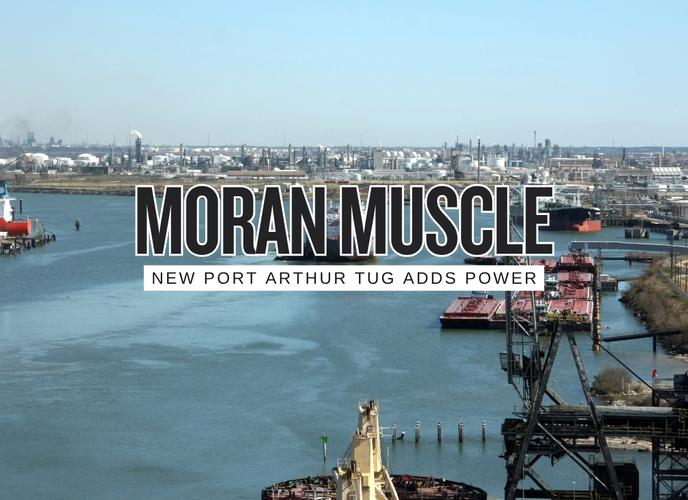
J Themistoclis Moran adds high-power ship assist capacity in Port Arthur
Moran Towing’s newest harbor tug has been christened in Port Arthur, Texas, bringing a 92-foot RApport 2800 class tractor tug into a Gulf Coast operating area where horsepower, bollard pull, low-emissions capability and reliable ship assist coverage matter every day.
Operator Impact Snapshot
Reported vessel length for the J Themistoclis Moran, paired with a 40-foot beam.
Reported horsepower level, placing the tug in Moran’s high-power Gulf Coast harbor-assist group.
Reported bollard pull, giving the tug strong capability for ship assist and escort-style harbor work.
Powered by EPA Tier IV Caterpillar 3516E engines and built with ABS low-emissions certification.
Twin Kongsberg US255 Z-drive propulsion units support maneuverability and thrust control.
Sources: Moran announcement, WorkBoat coverage, Moran Port Arthur fleet.
Specifications at a glance
The J Themistoclis Moran sits in the higher-power end of the harbor tug conversation. Its reported 92-foot by 40-foot footprint gives it a compact harbor-assist profile, while more than 7,000 horsepower and over 87 metric tons of bollard pull give it the muscle needed for larger vessel movements and tight industrial-port work. The combination of Tier IV engines, low-emissions certification and Z-drive propulsion also places the vessel inside the current procurement trend toward cleaner, more maneuverable and more documented tug capacity.
| Feature | Reported detail | Operational meaning | Stakeholder signal |
|---|---|---|---|
| Class type | RApport 2800 class tractor tug | Modern harbor-assist platform with strong maneuverability and compact working size. | Owners and operators are still investing in proven ASD tractor designs. |
| Dimensions | 92 feet long by 40 feet wide | Wide-beam, high-control harbor tug configuration suited for ship assist. | Port users get high thrust in a vessel sized for confined operations. |
| Power | More than 7,000 horsepower | Strong reserve power for large ship handling, terminal work and difficult conditions. | Raises expectations for newer Gulf Coast harbor tug capability. |
| Bollard pull | Over 87 metric tons | Useful strength for high-demand ship assist and escort-style work. | Brokers and charterers can view the tug as a serious high-pull local asset. |
| Engines | Tier IV Caterpillar 3516E engines | Cleaner engine package aligned with stricter port and customer emissions expectations. | Older tugs without cleaner engines may face sharper comparison. |
| Propulsion | Twin Kongsberg US255 Z-drives | High maneuverability, thrust control and responsive ship-assist performance. | Suppliers and shipyards see continued demand for integrated high-performance packages. |
Commercial signal
This christening is not only a fleet ceremony. It shows a major tug operator continuing to place newer, cleaner, higher-bollard-pull assets into the Gulf Coast. That matters for ports, terminals and vessel operators that need reliable assist capacity around refinery, petrochemical, LNG, bulk and heavy industrial traffic.
From christening to market impact
6 commercial signals from the J Themistoclis Moran
① Port Arthur remains a serious tug market
Port Arthur is not a casual harbor-assist location. The region sits inside a dense industrial corridor with refinery, petrochemical, energy, bulk, and export traffic. A new high-power tractor tug signals that operators still see value in deeper local fleet capability.
② Higher bollard pull is becoming the normal expectation
More than 87 metric tons of bollard pull places the tug well above many older harbor-assist assets. That does not mean every job needs that level of force, but it gives the operator more margin during difficult weather, larger ship calls, tight turns and critical berth movements.
③ Low-emissions certification is now part of the selling package
Moran’s announcement points to ABS low-emissions certification and Tier IV engines that reduce NOx emissions. For ports and terminals under clean-air pressure, that kind of documentation matters because it turns a tug’s environmental profile into something that can be shown to customers, regulators and local stakeholders.
④ Moran’s newbuild program remains visible
Moran has described its broader construction program as a major fleet enhancement effort in North America. The J Themistoclis Moran fits that larger strategy: keep renewing the fleet with modern tug platforms rather than relying only on older horsepower.
⑤ Gulf Coast energy work rewards redundancy
A single tug does not make a port reliable. Fleet depth does. In energy and industrial corridors, maintenance windows, weather, vessel bunching, pilot timing, terminal schedules and emergency coverage all make redundancy commercially valuable.
⑥ Suppliers gain a practical showcase
The tug brings together a recognizable package: Robert Allan design, Master Boat Builders construction, Caterpillar Tier IV power, Kongsberg Z-drives and high-bollard-pull harbor capability. For suppliers, the vessel is another example of how tug operators are buying complete working systems, not isolated equipment pieces.
Harbor tug capability fit tool
This interactive tool estimates how strongly a new high-power tug supports a port or terminal’s operating profile. It is designed for commercial planning, not engineering approval.
Capability value bar
Existing tug coverage may be adequate, but monitor vessel size, schedule pressure and emissions expectations.