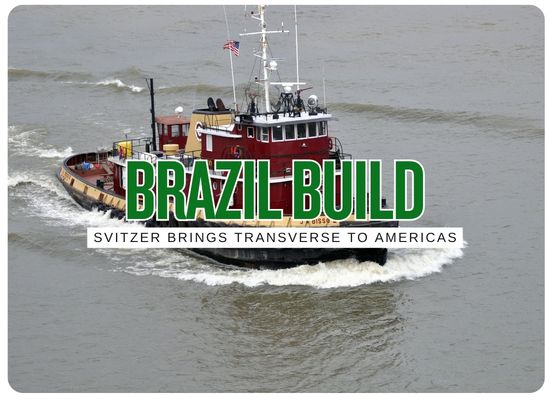
Brazil becomes the build site for Svitzer’s next tug platform
Svitzer’s first Americas-built TRAnsverse tugs will be constructed at Rio Maguari Shipyard in Belém, Brazil. The order brings a proprietary Svitzer and Robert Allan tug design into a market already being expanded by Svitzer, supported by Brazilian shipbuilding capacity, and shaped by growing port, LNG, commodity, and terminal activity.
Operator Impact Snapshot
TRAnsverse tugboats will be built in Brazil as the first Americas construction program for the design.
Direct jobs are expected from the project, alongside a much larger indirect employment impact.
Indirect jobs are expected through the regional maritime and shipbuilding value chain.
Svitzer markets the TRAnsverse design as offering up to 15% improved fuel efficiency.
Svitzer says the design can deliver up to 50% better performance in various practical situations and a wider operating envelope.
Sources: Svitzer TRAnsverse Americas announcement, Svitzer TRAnsverse platform, Riviera Maritime Media, Rio Maguari Svitzer tug series, Svitzer Pecém fleet expansion, Brazil port movement record.
The project places innovation beside active demand
The Americas debut is not being placed in a neutral shipyard market. It is being placed in a country where Svitzer already has operating depth, newbuild momentum, local shipyard familiarity, LNG-related work, and a widening port network. That combination matters because a new tug platform needs more than a blueprint. It needs a builder, a customer base, pilots, terminals, crews, maintenance support, port work, and a commercial reason to exist.
The TRAnsverse design is positioned as a more flexible harbor and terminal towage tool. Its double-ended hull concept, inline propulsion, patented staple arrangement, side-stepping capability, and direct-to-indirect handling profile are meant to give operators more control in complex maneuvers. Brazil gives Svitzer a place to connect those features with real port growth.
| Selection factor | Brazil signal | TRAnsverse connection | Stakeholder read |
|---|---|---|---|
| Shipyard trust | Rio Maguari has already delivered multiple Svitzer tugboats. | First Americas build needs a yard Svitzer already knows. | Lower execution risk than starting with an untested partner. |
| Port demand | Brazilian ports are moving record cargo volumes. | More activity creates demand for safer and more efficient towage. | Ports and terminals may value higher maneuvering capability. |
| Fleet footprint | Svitzer already operates across major Brazilian ports. | New tugs can be matched to real customer needs. | Less speculative than building for an uncertain market. |
| Energy work | Brazilian tug demand includes LNG, FSRU, and industrial-port activity. | TRAnsverse capabilities fit complex and high-safety maneuvers. | Energy terminals often reward redundancy and precision. |
| Local value chain | The build supports jobs and regional maritime development. | Local construction can make fleet renewal more politically and commercially durable. | Suppliers, crews, yards, and ports gain a stronger ecosystem. |
Build logic behind the Brazil decision
8 reasons Brazil became the Americas launch site
Rio Maguari already passed the relationship test
The most important factor may be the simplest: Svitzer and Rio Maguari already had a working build relationship. Rio Maguari recently delivered a series of ASD tugs for Svitzer, with each vessel built for practical Brazilian port work and several supporting demanding operating profiles.
That matters because the first TRAnsverse construction program in the Americas is not a routine repeat order. It is a higher-profile project that brings a patented Svitzer platform into a new regional construction base.
Brazil has the port scale to justify better tools
Brazil’s port sector is large enough that towage upgrades do not have to be justified by one terminal alone. National cargo movement is at record levels, and Svitzer has pointed to Brazil’s role in grains, oil, metals, green energy, and trade growth as a reason to keep investing in its local fleet.
TRAnsverse is designed for stronger control, better operating efficiency, and complex port movements. A growing port system gives those features more room to matter commercially.
Svitzer already has operating depth in Brazil
Svitzer’s Brazilian footprint gives the company a practical base for deploying, maintaining, crewing, and learning from new vessels. The company has referenced operations across multiple Brazilian ports and has continued adding modern tug capacity to the country.
That reduces the risk of building a new platform in a market without local operational feedback. Crews, pilots, terminals, and customers can all help prove whether the design delivers its promised value in local conditions.
Brazil’s energy corridor needs capable towage
Svitzer’s Brazilian growth story includes support for LNG and FSRU-related operations, along with industrial and port work that can demand reliability, firefighting capability, high maneuverability, and crew discipline. The company’s Pecém expansion language also points to larger ships, precision, and safety.
TRAnsverse is being marketed around control and maneuvering capability. That is a natural fit for ports handling energy, industrial, and larger vessel movements where a tug’s margin is not just a convenience.
Local construction supports more than vessel delivery
Svitzer’s announcement highlights direct and indirect job creation, regional value-chain development, and support for the Brazilian maritime industry. That gives the build a broader commercial and industrial-development narrative.
For a global tug operator, local shipbuilding can help align fleet renewal with workforce development, supplier growth, and regional credibility. That can matter in markets where ports, terminals, and public stakeholders want investment to stay close to the operation.
The design is flexible enough for mixed Brazilian demand
Svitzer describes TRAnsverse as a platform available in multiple sizes and power configurations, including electric, hybrid, dual-fuel, conventional fuel, and biofuel-enabled options. That matters in a country where port types, routes, terminals, customers, and infrastructure conditions can vary sharply.
A flexible design family lets Svitzer use the Americas build as more than a one-off construction event. It can become a platform discussion for different types of regional ports and terminals.
Brazil gives the Americas program regional credibility
Rio Maguari has publicly discussed ambitions to export tugboats mainly to Latin America and West Africa. That makes the TRAnsverse construction program more interesting than a purely domestic order.
If the build performs well, Brazil could become a reference point for other ports and operators in the Americas looking at modern towage capacity, local construction, and advanced tug design.
Svitzer is turning TRAnsverse into a global fleet platform
This is not an isolated tug concept. Svitzer says more than three quarters of its current 20-plus tug order book are TRAnsverse vessels, while industry coverage has counted TRAnsverse tugs already on order or in operation worldwide across several size and propulsion variants.
Brazil was chosen as the Americas construction step because the design is now moving from innovation story to fleet standard. The country offered an existing Svitzer market, a trusted yard, active port demand, and a broader industrial case.
The strategic read
Brazil was not just selected because it can build tugboats. It was selected because Svitzer already has the operating demand, shipyard relationship, customer base, local value-chain argument, and regional growth case needed to make an advanced tug platform commercially useful.
Stakeholder readout
Tug operators
High Fleet renewal ManeuverabilityThe order raises the benchmark for modern tug capability in Brazil and creates a clearer comparison point against older ASD assets in demanding harbor and terminal work.
Shipyards
High Brazil build Export signalRio Maguari’s role strengthens Brazil’s position in high-powered tug construction and gives the yard another reference point for regional work.
Ports and terminals
Medium Service quality Large shipsModern tug platforms can support safer and more efficient movements as ports handle larger vessels, tighter schedules, and complex terminal operations.
Suppliers
Watch Systems demand Local chainAdvanced tug construction can create demand for propulsion, controls, winches, electronics, steel work, firefighting systems, training, and lifecycle support.
Brazil selection scorecard
| Reason | Evidence | Commercial effect | Watch item |
|---|---|---|---|
| Existing yard trust | Rio Maguari has built Svitzer tugboats already. | Reduces build-risk perception for the first Americas TRAnsverse project. | Execution quality on a more advanced design. |
| Port growth | Brazilian port movement is at record levels. | Supports the business case for higher-capability towage. | Regional demand by port and terminal type. |
| Fleet renewal | Svitzer is expanding and modernizing its Brazil fleet. | Creates a ready network for deployment, crewing, and learning. | Which ports receive the new units after delivery. |
| Industrial value | The project is expected to create direct and indirect jobs. | Strengthens the local maritime production chain. | Supplier development and service support depth. |
| Regional pathway | Rio Maguari has discussed export ambitions for tugboats. | Could position Brazil as a wider Latin America and Atlantic reference build site. | Future orders beyond the initial two vessels. |
TRAnsverse Brazil fit calculator
This planning tool estimates whether a port or region looks like a strong fit for a TRAnsverse-style tug investment. It is designed for commercial screening, not naval architecture or class approval.
Strategic fit bar
Fit appears early. Watch local traffic growth, customer requirements, and fleet-renewal timing.