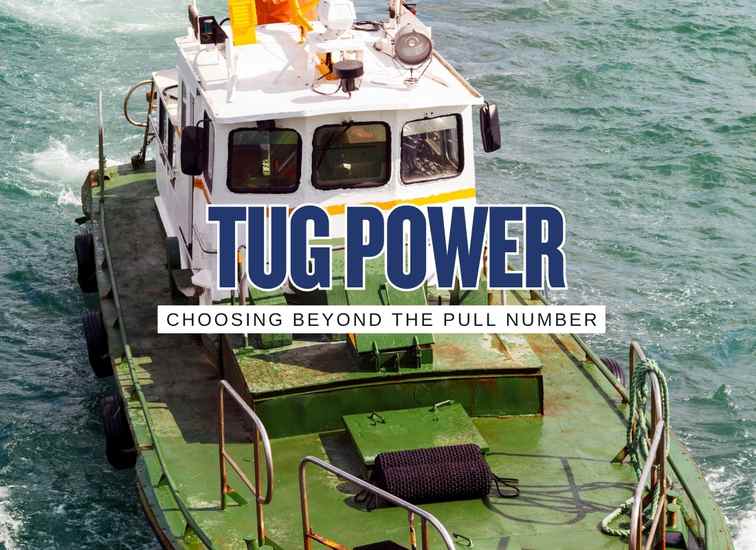
A tug’s bollard pull is still one of the first numbers buyers, charterers, terminals, and pilots look at because it gives a certified snapshot of static pulling force at zero speed. But real tug selection gets more complicated the moment the job shifts from a calm-water test to a live berth, a windy channel, a large container ship with heavy windage, or an escort assignment at speed. The better question is not simply “how much bollard pull does this tug have,” but “how much useful control can this tug deliver in this operating profile, with this drive type, this hull form, this winch setup, and these local conditions.” Recognized trial standards define bollard pull as a full-scale test of horizontal towline force at zero knots in unrestricted calm water, while pilot and port guidance repeatedly tie tug suitability to more than bollard pull alone, including tug type, maneuverability, vessel windage, and the mix of tugs assigned to the job.
Bollard pull is the starting point, not the whole answer
A tug can show a strong certified bollard pull number and still be the wrong tool for a demanding berth, a high-wind container ship, a tight turning basin, or an escort profile that depends on steering and braking forces at speed. Buyers who treat bollard pull as a shortcut often end up underestimating the importance of drive type, hull form, line handling, astern performance, deck gear ratings, and the way local pilots actually use tugs.
The number buyers look for first
Bollard pull is the tug’s measured pulling force when secured to a fixed point and operating at zero vessel speed. That makes it a useful benchmark because it strips the problem down to one core question: how much static thrust can the tug actually turn into towline force under test conditions.
That benchmark has real value. It gives charterers and operators a certified figure that is easier to compare than engine horsepower alone. It also helps ports group tugs into classes, write movement guidelines, and set minimum tug requirements for different ship sizes and windage exposures.
Where the right tug gets separated from the merely powerful one
- Drive arrangement changes how force can be used An ASD, tractor, or other omni-directional design can often apply force more flexibly in ship-assist work than a conventional tug. The same bollard pull rating can feel very different in close-quarters handling depending on thrust direction, response speed, and how safely the tug can work on different headings.
- Hull form affects indirect capability In escort work, the hull and skeg can create hydrodynamic lift and drag at speed. That means a tug’s useful steering or braking effect may depend heavily on escort-specific design, not just on static bollard pull.
- Astern performance matters more than many buyers expect A tug may advertise a strong ahead bollard pull figure, but the astern figure can be lower. Depending on the assignment, that gap can change how much practical control the tug can deliver.
- Winch and deck gear limits can become the real bottleneck A tug is not just engines and thrusters. Towline strength, safe working loads, render-recover capability, and deck fitting ratings can determine how much of the tug’s theoretical force is usable in real operations.
- Weather and ship windage can quickly change the requirement Tug allocation is often adjusted around the assisted ship’s windage and the local conditions. A tug that is adequate on a calm day may be marginal in strong beam winds or exposed terminal approaches.
Five selection mistakes that make bollard pull look more decisive than it really is
How operators usually think about the tug fit question
Harbor ship assist
Buyers normally care about dependable static pull, fast response, close-quarters maneuverability, safe towing geometry, and a tug type that fits local pilot practices.
Escort work
Static bollard pull remains important, but steering and braking performance at speed, hull form, skeg design, winch behavior, and training become much more decisive.
Coastal or ocean towage
Endurance, seakeeping, line systems, reserve power, and towing gear strength can matter as much as the headline pull figure.
Mixed port fleets
The winning fleet composition is often a balance of tug classes rather than one oversized answer for every berth and every weather window.
A simple way to think about bollard pull in tug selection
| Selection factor | Impact | Before choosing the tug |
|---|---|---|
| Certified bollard pull | Baseline measure of static pulling force | Certification basis, ahead and astern figures, date of trial, whether the figure is steady and repeatable |
| Drive type | Changes maneuverability, thrust direction, and handling safety | Conventional, ASD, tractor, or other layout and how it matches the local job pattern |
| Hull form and skeg | Strongly affects escort behavior and indirect force generation | Whether the tug was truly designed for escort or mainly for low-speed ship assist |
| Winch and tow gear | Determines safe and usable line handling under load | Render-recover capability, towline MBL, deck fitting ratings, emergency release arrangements |
| Astern capability | Some jobs rely on force delivery in more than one direction | Ahead versus astern performance, not just the best marketing figure |
| Ship mix and windage | Large exposed-sided vessels can quickly increase tug need | Local vessel types, berth exposure, expected winds, current, and turning basin constraints |
| Operating role | The right tug for one task may be inefficient or unsuitable for another | Harbor assist, escort, towage, terminal standby, firefighting, ice, or mixed-service requirement |
| Fleet balance | Ports often need a combination of tug sizes and types | Whether two balanced tugs would create more resilience than one bigger headline unit |
Tug fit scorecard
This quick tool is not a naval architecture calculation. It is a decision-support screen designed to show when a buyer should move past the headline bollard pull number and dig deeper into tug type, hull form, gear strength, and local conditions.
A more practical tug shortlisting checklist
- Start with certified bollard pull Use it as the first filter, not the whole selection.
- Check ahead and astern behavior Especially for ports where tugs switch working positions frequently.
- Match tug type to port reality Ask how the tug will actually be used by local pilots, not how it looks in a brochure.
- Verify towing gear ratings and line logic Strong propulsion is wasted if the usable system limit sits in the winch, line, hook, staple, or deck fitting.
- Test the design against worst normal conditions Windage, current, berth geometry, and traffic pressure can reveal the gap between “adequate on paper” and “reliable in service.”
- Think in fleet terms when relevant Two balanced tugs may create more resilience and more practical utility than one oversized single answer.