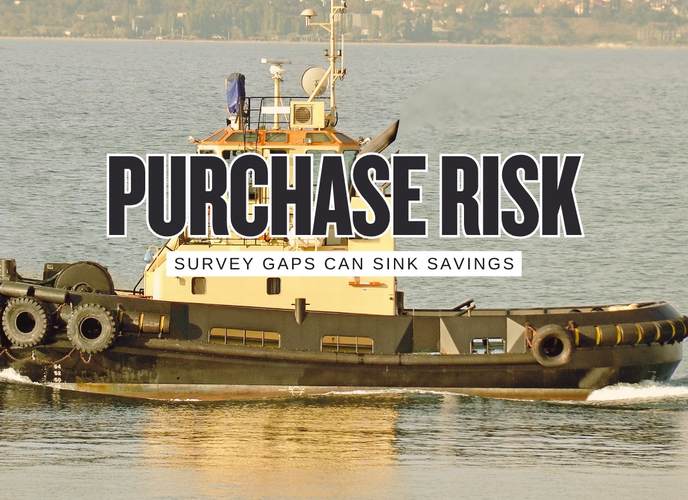
The cheapest tug can become the most expensive boat in the fleet
A used tugboat purchase should start with the work, not the listing. The right vessel has to fit the route, tow size, berth, current, wind, crew, engine rules, certificates, customer contracts, and maintenance budget. A low purchase price can disappear quickly if the buyer misses steel wastage, hidden machinery fatigue, steering gear wear, class gaps, COI restrictions, weak documentation, or an emissions problem that limits the boat’s next job.
A Certificate of Inspection can define operating limits, routes, manning, and conditions that directly affect the tug’s earning power.
A serious purchase review usually needs three inspection tracks: hull, machinery, and paperwork.
Engine emissions status can affect future repower cost, port access, grant eligibility, and customer acceptance.
Bollard pull should be matched to the actual job, not treated as a bragging number on a sales sheet.
Sources: eCFR Subchapter M, USCG TugSafe, Boat Trader survey guide, CARB marine vessel funding, Bollard pull and tug selection research.
The purchase should be treated like a small acquisition
A used tug is not just a boat. It is a revenue-producing asset with regulatory exposure, crewing requirements, maintenance liabilities, customer-fit limits, and resale risk. The buyer should evaluate the vessel the way a serious business buyer would evaluate a company: condition, records, earnings potential, liabilities, compliance status, future capex, market fit, and exit value.
The most useful question is not whether the tug is generally “good.” The useful question is whether the tug can perform the buyer’s intended work safely, legally, and profitably after realistic repairs, upgrades, drydock, financing, insurance, crewing, and mobilization are included.
Purchase path that avoids most surprises
Top mistakes when purchasing a used tugboat
Buying horsepower instead of mission fit
Horsepower is easy to compare, but it can mislead buyers. A tug with impressive horsepower may still be wrong for the job if it has the wrong draft, fendering, winch arrangement, wheelhouse visibility, maneuverability, propeller protection, fuel capacity, crew space, or bollard pull profile.
The buyer should start with the work: harbor assist, inland towing, shipyard shifting, dredge support, barge towing, offshore support, salvage standby, terminal escort, or marina and construction work. Each mission creates a different vessel requirement.
Trusting listed bollard pull without context
Bollard pull is one of the most important numbers in a tug purchase, but it needs context. Buyers should verify whether the figure is certified, estimated, historical, fresh, continuous, ahead pull, astern pull, or simply copied from an old sales sheet.
A tug’s practical pulling value also depends on propulsion condition, propeller and nozzle condition, engine output, gearbox health, hull fouling, towing gear, and whether the vessel can safely apply power in the buyer’s real operating environment.
Skipping a real machinery survey
Main engines, generators, gearboxes, shafts, seals, cooling systems, hydraulics, steering systems, air systems, and fuel systems carry much of the hidden cost in a used tug. A general hull survey is not enough.
Buyers should use engine specialists, oil analysis, boroscope inspection where justified, compression or performance testing when appropriate, vibration clues, exhaust readings, coolant review, service records, load behavior, and sea-trial data. The goal is not perfection. The goal is to price the remaining useful life honestly.
Underestimating steel and drydock exposure
Hull steel, deck wastage, frames, bulkheads, tanks, sea chests, rudders, skegs, nozzles, coolers, and void spaces can carry major cost. A tug can look work-ready from the dock and still need expensive steel work once hauled.
A buyer should not rely on paint, seller photos, or a recent topside cleanup. Ultrasonic thickness readings, drydock inspection, internal tank access, bilge condition, coating condition, and repair history matter. Steel work also creates schedule risk because yard availability and hidden repairs can extend downtime.
Ignoring Subchapter M and COI limits
In the U.S. market, towing vessel compliance can directly affect whether the tug can work, where it can work, how it must be manned, and which systems must be corrected. A used tug with a weak paperwork position may not be a bargain. It may be a compliance project.
Buyers should review the Certificate of Inspection, route restrictions, operating conditions, manning, inspection history, outstanding deficiencies, TSMS status if applicable, fire protection, lifesaving equipment, navigation equipment, machinery requirements, and records. A vessel that worked for the seller may not be cleared for the buyer’s intended route or service.
Missing emissions and repower risk
A used tug’s engine tier can affect port access, customer acceptance, grant eligibility, resale value, and future repower cost. This is especially important in emissions-sensitive regions, clean-port programs, California-linked work, public agency contracts, and passenger-facing harbors.
The buyer should know engine model, horsepower, build configuration, certification status, aftertreatment, smoke history, repower feasibility, engine-room space, cooling capacity, exhaust routing, and whether the vessel has a realistic path to cleaner operation. The emissions issue is no longer just a regulatory line item. It is a commercial filter.
Overlooking crew comfort and manning reality
Crew spaces are not cosmetic. Watch schedules, bunk quality, galley condition, HVAC, noise, vibration, head and shower layout, storage, visibility, access, and safe deck movement all affect retention and fatigue. A tug that is hard to live on can become hard to crew.
Buyers should evaluate the vessel against the actual crew model. A day boat, harbor tug, inland towboat, and coastal tug have different accommodation expectations. If the boat needs to retain experienced mariners, comfort and safety features become part of the business case.
Failing to verify towing gear and deck equipment
Winches, tow pins, staple, capstans, H-bitts, fendering, towing wire, synthetic lines, shackles, emergency tow gear, firefighting monitors, cranes, and deck hydraulics need serious attention. A tug can have strong engines and still be operationally weak if its deck equipment is tired, undersized, poorly arranged, or undocumented.
Buyers should review certificates, safe working loads, inspection records, hydraulic leaks, brake performance, controls, spares, line condition, fender attachment, deck corrosion, and whether the equipment matches the intended work. Towing gear is not an accessory. It is the connection between the tug’s power and the job.
Accepting dirty title or weak transaction documents
A tug buyer should not get distracted by steel and engines while ignoring ownership documents. Liens, mortgages, unpaid yard bills, disputed ownership, tax exposure, missing releases, flag issues, class suspensions, or unclear delivery conditions can damage the deal after money changes hands.
A clean closing should include bill of sale, corporate authority, lien releases, registry or documentation review, class and certificate transfer requirements, spares list, onboard equipment inventory, delivery protocol, fuel and lube accounting, risk of loss timing, and escrow protections when justified.
Forgetting the first-year ownership budget
The purchase price is only the entry ticket. The real first-year budget may include drydock, class or COI work, steel repairs, engine service, generator service, electronics, lifesaving gear, firefighting gear, navigation equipment, towing gear, insurance, crew hiring, delivery voyage, fuel, spares, dockage, registration, legal review, and customer-specific modifications.
Buyers should build a first-year capex and operating plan before closing. A used tug that costs $800,000 and needs $500,000 to become useful is a very different asset from a $1.1 million tug that can work immediately.
The buyer’s best protection
The safest used tug purchase is built around proof: survey proof, sea-trial proof, machinery proof, certificate proof, title proof, customer-fit proof, and budget proof. A seller’s reputation helps, but documentation and inspection evidence protect the buyer.
Due diligence scorecard before making the offer firm
| Review area | Evidence to request | Deal impact | Red flag |
|---|---|---|---|
| Hull and structure | Haul-out report, photos, ultrasonic readings, tank condition, steel repair history. | Can drive immediate drydock and repair allowance. | Fresh paint over unknown steel condition. |
| Machinery | Engine logs, oil analysis, service invoices, sea-trial data, overhaul history. | Can define remaining useful life and working reliability. | High hours with no documented maintenance trail. |
| Compliance | COI, inspection records, deficiencies, class status, certificates, lifesaving and fire gear records. | Can decide whether the vessel can work immediately. | Vague statements that paperwork is “being handled.” |
| Commercial fit | Target job list, bollard pull evidence, route requirements, crew plan, customer acceptance. | Can separate a bargain from a mismatch. | Buying for a job the vessel has never performed. |
| Transaction | Bill of sale, lien releases, ownership authority, inventory list, delivery terms, escrow plan. | Can prevent closing disputes and post-sale surprises. | Pressure to wire funds before documents are complete. |
Buyer profile checks
Harbor and shipyard buyer
Maneuverability Visibility FenderingFocus on response time, wheelhouse visibility, fender layout, controls, propulsion condition, deck safety, and whether the tug can shift vessels cleanly in tight spaces.
Inland and barge buyer
Endurance Crew space Fuel useFocus on towing gear, crew accommodations, fuel burn, engine reliability, shallow-water performance, steering, and whether the tug can support the intended hitch schedule.
Energy and terminal buyer
Redundancy Firefighting ComplianceFocus on bollard pull proof, emergency capability, escort suitability, emissions status, customer documentation, and contract-specific operating requirements.
Speculative resale buyer
Clean title Repair spread Market depthFocus on title, true repair cost, transport cost, buyer pool, certificate position, and whether the vessel has a broad enough market after repairs.
Used tugboat purchase risk checker
This quick planning tool estimates whether a used tugboat deal looks low, rising, medium, or high risk before closing. It is a commercial screening tool, not a substitute for survey, counsel, class review, or engineering advice.
Deal risk bar
Deal profile looks manageable, but still confirm survey, machinery, paperwork, and job fit before closing.
Fast checklist before the buyer wires money
Commercial read for buyers
A good used tugboat purchase is not the boat with the lowest price. It is the vessel with the clearest fit, the cleanest evidence, the most realistic first-year budget, and the fewest hidden operating restrictions. The strongest buyers slow the deal down long enough to verify hull, machinery, certificates, emissions status, title, and job fit before they let the purchase price become the only number in the room.