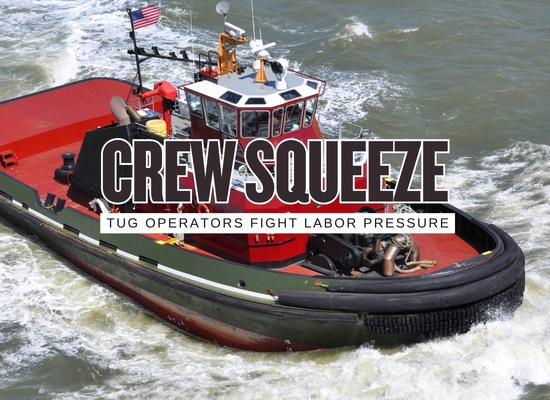
Operators are redesigning the job before the shortage redesigns the fleet
Tug and towboat operators are under pressure to recruit, credential, train, schedule, and retain qualified people while still protecting safety. The companies gaining ground are not simply offering one-time bonuses. They are rebuilding the work system around better rotations, faster credential support, healthier crews, stronger training pipelines, safer boats, and smarter dispatch.
AWO describes the tugboat, towboat, and barge industry as the largest segment of the Jones Act fleet, with 40,000 vessels across the domestic system.
AWO says the domestic maritime industry supports 650,000 American jobs and $154 billion in economic output.
SCI says more than 75% of Ministry on the River crisis responses in 2025 were related to physical or mental health issues, showing why wellness is now tied to retention.
MARAD’s workforce strategy is organized around six goals to grow, train, and retain the U.S. mariner workforce.
The operator shift
Labor pressure used to be treated as a recruiting department problem. In tug operations, it now touches every part of the company: dispatch, safety, maintenance, vessel design, training, benefits, credential tracking, customer scheduling, and even which contracts are worth accepting.
The shortage shows up in daily operations
Crew pressure rarely arrives as one clean headline. It shows up as overtime fatigue, relief shortages, delayed crew changes, rising wage competition, thinner applicant pools, credential delays, training bottlenecks, last-minute dispatch reshuffles, and experienced mariners leaving for shore-side or offshore work. The operator may still move cargo, but the margin for error becomes narrower.
The safety risk is subtle. A short-staffed company may begin relying too heavily on its best people, stretching relief pools, rushing advancement, delaying training, or accepting contracts that look profitable until the crewing plan gets tight. The better operators are reducing labor pressure by removing waste from the system, not by reducing safety expectations.
Labor pressure pathway
9 ways operators are reducing labor pressure without sacrificing safety
① Building steadier rotation models
Predictable rotations are one of the strongest retention tools in tug and towboat operations. Mariners can tolerate hard work more easily when they can plan family time, medical appointments, rest, travel, and finances around a schedule that does not constantly shift.
Operators are looking at crew pools, relief planning, trip lengths, terminal schedules, and crew-change locations to reduce last-minute disruption. The goal is not to make tug work easy. It is to make the job livable enough that trained people stay.
② Treating credential support like operations support
Credential friction can turn a willing mariner into an unavailable mariner. Operators are reducing that risk by helping crews track renewal dates, medical certificates, endorsements, training deadlines, sea-time letters, and application packets.
A strong crewing department does not wait for a license to expire. It runs a calendar, sends reminders, helps gather documents, and flags at-risk credentials before they become dispatch problems.
③ Creating local training ladders
Operators are building relationships with maritime schools, high schools, community colleges, workforce boards, veterans groups, and regional training centers. The strongest pipeline is not a one-time recruiting booth. It is a visible path from entry-level deckhand to tankerman, steersman, mate, pilot, engineer, or captain.
Younger workers often need to see the career arc before they commit. Tug companies that can show pay progression, training support, sea-time milestones, and advancement examples have a better story than companies hiring only when they are desperate.
④ Using simulators and scenario drills for faster skill building
Simulators, tabletop exercises, and scenario drills help newer mariners practice difficult situations before the pressure is real. This is especially useful for close-quarters maneuvering, lock approaches, bridge transits, line handling, emergency response, man-overboard recovery, tank barge procedures, and heavy-weather decisions.
Simulation does not replace sea time, but it can make sea time more productive. A trainee who has already rehearsed the decision pattern can learn more from real operations.
⑤ Reducing paperwork that steals crew energy
Tug crews are not leaving only because of hard physical work. They also lose time and patience to duplicated forms, manual logs, clunky reporting, unclear maintenance tickets, and shore-side systems that do not match vessel reality.
Operators are using digital forms, mobile checklists, maintenance apps, electronic credential records, and better dispatch tools to reduce administrative drag. The goal is not to bury crews in screens. It is to remove repetitive shore-side friction from the watch.
⑥ Improving onboard connectivity and crew comfort
Connectivity is becoming a retention tool. Mariners want to stay connected with family, manage personal business, access telehealth, handle training, and decompress during off-watch time. Operators are also looking at cabins, noise, galley quality, climate control, laundry, lighting, and internet access as practical retention investments.
A tug does not need to become a hotel. It does need to feel like a professional workplace where the company respects the people living and working onboard.
⑦ Designing safer vessels around fewer wasted movements
Vessel design can either increase crew strain or reduce it. Better deck layouts, safer access, improved lighting, camera support, ergonomic controls, protected work areas, smarter line-handling systems, and clearer visibility can reduce physical wear and exposure.
This matters because labor pressure makes every injury more costly. Losing one experienced crewmember can force overtime, schedule changes, and customer disruption. Safer design is a retention tool as much as a compliance tool.
⑧ Using smarter dispatch instead of simply adding overtime
Labor pressure often gets worse when dispatch is reactive. Operators are using better scheduling tools, AIS awareness, customer planning, maintenance windows, crew availability data, and delay tracking to match work with people more intelligently.
The point is not to squeeze more out of each mariner. The point is to avoid avoidable waste: unnecessary repositioning, poorly timed crew changes, delayed relief, stacked jobs, repeated standby, and maintenance conflicts that turn into crewing problems.
⑨ Making wellness part of safety management
The inland mariner wellness conversation has become much harder to ignore. Fatigue, physical health, mental health, isolation, chronic stress, and substance-use risk can all affect safety and retention. Operators are starting to treat wellness as part of operational resilience, not a side benefit.
Practical steps include confidential support, telehealth access, fatigue reporting, better food and sleep conditions, supervisor training, peer support, fitness resources, mental-health awareness, and a culture where mariners can raise concerns before they become crises.
Pressure points by operator type
Harbor-assist operators
Fast dispatch Night work Relief gapsHarbor operators face rapid schedule changes, ship delays, weather windows, and high customer visibility. Crew pressure often shows up as standby fatigue, short-notice calls, and limited relief flexibility.
Inland towboat operators
Long hitches Wellness Training ladderInland operators need strong retention systems because the work can be physically and mentally demanding. Wellness, schedule predictability, and advancement pathways matter heavily.
Tank barge operators
Credentials Procedures Safety cultureTank barge work adds specialized credentialing, compliance, and procedure pressure. The labor strategy must protect training quality and avoid rushing advancement.
Offshore and project operators
Mobilization Special skills CompetitionOffshore wind, dredging, construction, and energy projects can compete for the same skilled mariners. Operators need early staffing plans before project mobilization compresses the schedule.
| Labor-pressure fix | Best safety benefit | Commercial effect | Watch item |
|---|---|---|---|
| Predictable rotations | Lower fatigue and fewer rushed relief decisions. | Better retention and stronger recruiting message. | Requires enough relief depth to keep promises. |
| Credential tracking | Fewer compliance gaps and emergency substitutions. | More usable crew days from existing mariners. | Needs active support, not just reminder emails. |
| Training ladders | More controlled advancement and better skill development. | Reduced dependence on outside hiring. | Pay progression must match responsibility. |
| Smarter dispatch | Protects rest windows and reduces avoidable stress. | Higher utilization without blind overtime. | Bad data can create false efficiency. |
| Wellness support | Earlier intervention for fatigue, health, and mental strain. | Improved retention and fewer crisis disruptions. | Crews must trust the program enough to use it. |
Crew pressure risk checker
This tool helps operators estimate whether labor pressure is low, rising, medium, or high. It is designed for planning conversations, not regulatory compliance.
Pressure bar
Maintain current staffing controls and watch upcoming credential dates.