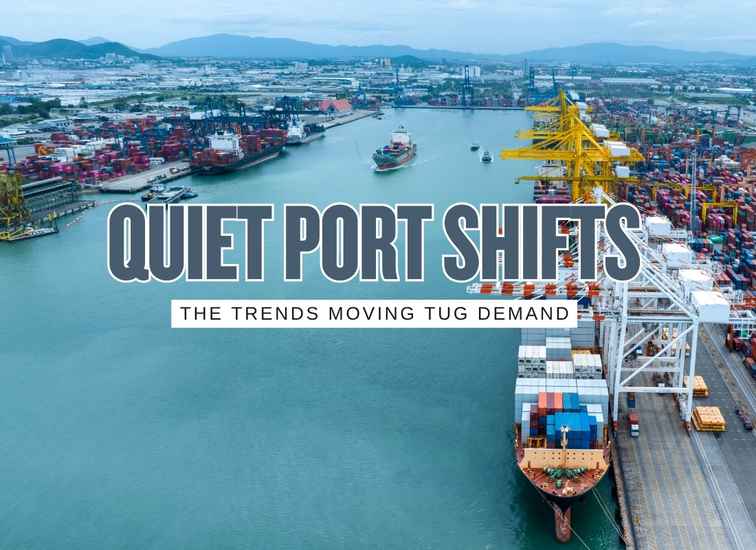
A lot of tug demand changes do not begin with a dramatic spike in port traffic. They start earlier and more quietly through larger vessel calls, alternative-fuel bunkering buildout, digital port-call systems, resilience spending, offshore energy support, and changing port layouts and terminal expectations. UNCTAD’s 2025 review says port-call patterns are being influenced by alternative-fuel bunkering availability and wider network disruption, IMO confirms Maritime Single Windows have been mandatory since January 1, 2024 and continue to reshape digital port processes, the World Bank now frames resilience and digitalization as core port trends, and IAPH’s 2025 tracker shows ports actively investing in sustainability, infrastructure, and risk preparedness. Those shifts do not always look like “more ships,” but they can still change tug demand materially.
• more complex berth approaches and terminal layouts
• alternative-fuel bunkering and cleaner-vessel positioning
• tighter port-call timing and digital coordination pressure
• resilience and emergency-readiness planning
• offshore energy and adjacent marine project support
• changing cargo routing and transshipment behavior
One of the quietest but most powerful tug-demand shifts comes from vessel profile rather than vessel count. A port can look stable in traffic terms and still become a harder tug market if a larger share of calls involves bigger containerships, larger gas carriers, or more difficult hull profiles at the berth.
In practical terms, the tug question becomes less about how many jobs the port has and more about how many of those jobs now require stronger control, better working geometry, and higher-confidence handling.
Ports competing for alternative-fuelled shipping often change more than just their bunker offer. They can create new vessel traffic patterns, stricter safety expectations, and a more conservative operating posture around high-value fuel-handling activity. Tug demand may not spike in a simple straight line, but the quality and nature of tug services required can shift upward.
That is one reason cleaner-shipping ambition can quietly support higher-spec towage demand even before a port looks dramatically busier overall.
Once ports begin exchanging arrival, stay, departure, and coordination data more cleanly, tug services become easier to measure against the wider port timetable. That does not always increase tug jobs, but it can increase the commercial value of dispatch reliability, quick mobilization, and better fit between tug availability and vessel readiness.
In that sense, digitalization quietly changes tug demand by changing what “good service” now looks like to terminals, pilots, and customers.
Ports facing stronger climate risk, disruption pressure, or emergency-readiness expectations are often becoming more interested in standby logic, recovery support, and continuity planning. Tug demand can strengthen here without showing up as a simple increase in routine ship-assist jobs.
That makes resilience one of the quietest commercial drivers in the tug market because it can improve the value of availability and readiness, not just active towage hours.
When shipping networks shift because of canal constraints, trade-policy changes, conflict-related disruption, or changing transshipment choices, tug demand does not rise evenly everywhere. It often pops up in certain ports first as harder peaks, stranger vessel mixes, or more awkward scheduling pressure.
Those bursts can matter a great deal to local tug economics even if the annual average still looks ordinary.
Offshore wind, offshore energy infrastructure, and related marine construction can raise the strategic value of certain ports even before tug demand shows up in simple harbor-assist statistics. The port begins to function as a broader energy and project node, which can support more standby work, more support activity, and more premium marine-service roles.
In the right location, that can create a tug market that is quietly changing shape rather than just growing in volume.
Use this quick screen to estimate whether a port may be becoming a more demanding tug market even if the traffic headlines still look fairly normal.