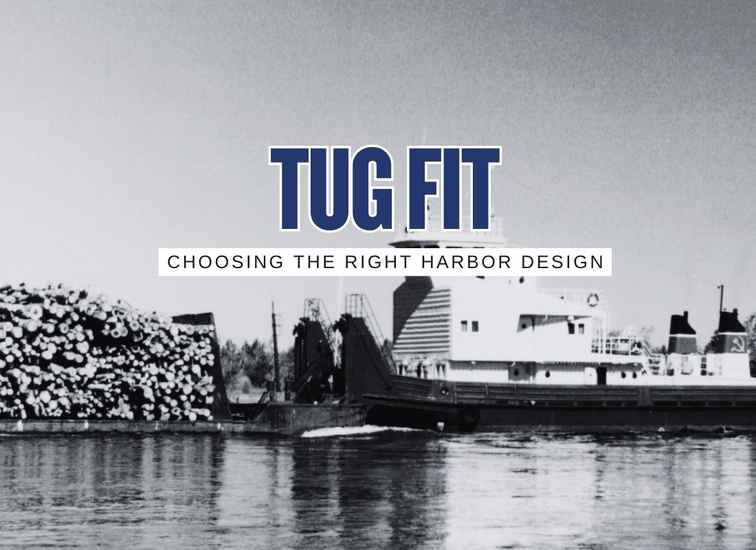
A lot of tug comparisons online flatten this into a simple maneuverability debate, but the real answer depends on the port profile, ship mix, escort demands, visibility from control positions, tow point geometry, crew familiarity, and how often the tug must switch from pure ship-assist work into escort or other utility roles. In practice, both azimuth stern drive and tractor tugs can be excellent performers, but they solve the job from different starting points. ASD tugs are often favored as highly versatile harbor workhorses that can push, pull, escort, and handle a broader spread of daily assignments, while tractor designs are often chosen when operators value very fine control, strong indirect towing behavior, and precise handling around large ships or terminals. The right decision usually comes from matching the tug to the work pattern, not from chasing one “best” design label.
Two proven answers to the same port problem
Choosing between an azimuth stern drive tug and a tractor tug is rarely about which one is “better” in the abstract. It is about where the propulsion units sit, how the tow point works with the hull, what type of ship-assist and escort work dominates the schedule, and how much operational flexibility the owner needs from one hull. In some ports, an ASD tug is the best all-round commercial answer. In others, a tractor tug earns its keep through tighter handling control, stronger indirect towing confidence, or a better fit for high-consequence terminal and escort work.
The short read from an operator view
the port wants a compact multi-role tug that can move between everyday harbor assist jobs, push-pull work, occasional escort duties, and utility roles without over-specializing the fleet. They are often a strong fit where utilization matters more than extracting every last bit of precision from a narrower operational envelope.
the port puts a premium on exact control around large ships, demanding escort behavior, strong indirect towing confidence, and handling characteristics that support very deliberate pilotage and terminal operations. They often shine where precision and controllability are business-critical rather than simply desirable.
The more escort-intensive, speed-defined, and pilot-sensitive the operation becomes, the more hull form, skeg design, tow point arrangement, and control philosophy start to outweigh generic bollard pull comparisons. That is where a shallow comparison often goes wrong.
Side by side operating picture
| Decision factor | ASD tug | Tractor tug |
|---|---|---|
| Propulsion layout logic | Azimuth units aft. Commonly treated as a stern-drive harbor tug with strong all-round workboat versatility. | Propulsion units forward of amidships in the classic tractor arrangement. The tug “pulls” from a different balance point and handling feel. |
| Daily ship-assist flexibility | Very strong. Often favored where one tug must cover many job types over a shift. | Strong, but often selected when handling precision is valued enough to justify a more mission-shaped fleet choice. |
| Escort specialization | Can be excellent, especially in purpose-built escort ASD designs. Not every harbor ASD should be treated as an elite escort platform. | Often very compelling for escort and terminal work, especially when steering and braking performance in indirect mode are central requirements. |
| Pilot confidence in tight quarters | Usually high, especially with experienced crews and mature operating procedures. | Often excellent due to the precise control reputation associated with tractor layouts and Voith-based handling traditions. |
| Learning curve and operating feel | Common choice for operators who want broad market familiarity and a workboat-style tug fleet profile. | Can reward skilled crews with outstanding control, but training quality and procedural discipline matter a lot. |
| Mission creep resistance | Very good when the tug will be asked to do “everything.” | Best when the operation knows exactly what it wants from the tug and will use those strengths consistently. |
| Best buying mindset | Buy when versatility, fleet simplicity, and broad harbor task coverage drive the business case. | Buy when premium control, escort behavior, and high-consequence handling justify a more tailored choice. |
Where ASD often pulls ahead
If a tug operator is being paid to solve many different harbor problems over a week rather than dominate one narrow profile, ASD usually gets serious attention. These boats are commonly marketed and bought as multi-purpose platforms, which fits ports where dispatch patterns change constantly.
Many harbor jobs are not textbook escort missions. They are short, repetitive, practical maneuvers around berths, basins, and terminals. ASD tugs are often chosen because they are comfortable living in that world all day.
Firefighting capability, oil spill response options, harbor towing, escort work, and other support tasks are often packaged around ASD designs. For operators who want utilization resilience, that matters more than theoretical superiority in one maneuvering mode.
Where tractor tugs earn the premium
In ports or terminals where mistakes are expensive and ship sizes are unforgiving, tractor tugs are often valued for their precise response and very controlled handling feel. That can matter as much as raw bollard pull.
Once the conversation shifts from bollard pull to steering force, braking force, escort speed envelope, and indirect towing behavior, tractor designs often become very persuasive. Buyers focused on escort risk control tend to look beyond static pull numbers for exactly this reason.
Some ports simply build their operating culture around tractor-type control philosophy. When pilots, tug masters, and terminal procedures have grown up around that approach, staying aligned with local practice can be more valuable than theoretical cross-type flexibility.
The part buyers often miss
The most expensive mistake is not buying the “wrong type” in theory. It is buying a tug whose real operating envelope does not match the work pattern. A harbor ASD can be oversold as an escort specialist. A tractor tug can be underutilized in a port that mostly needs a highly productive daily workhorse. The design label does not rescue a poor mission fit.
Buyers should also remember that modern tug design is not frozen into old categories. Some advanced designs blend characteristics from both families, and purpose-built escort tugs can differ dramatically from more general harbor units even when the label sounds similar.
Three buying scenarios that make the answer clearer
The tug is doing frequent berthing, unberthing, turning, pushing, pulling, standby support, and occasional escort assignments.
Likely lean: ASD, unless escort intensity and pilot preference are unusually high.
Steering force, braking force, indirect towing behavior, and predictable control under pressure are central to the contract.
Likely lean: Tractor or other purpose-shaped escort design, depending on local doctrine and ship mix.
The business case depends on utilization, maintenance practicality, broad availability, and a fleet that can cover many assignments without constant specialization.
Likely lean: ASD, unless the replacement program is specifically targeting escort capability uplift.
A better way to compare than just bollard pull
Ask at what speed the tug is expected to generate meaningful steering and braking performance, not just what its static pull is at the dock.
Look at staple location, winch arrangement, operator sightlines, and how visible critical gear is from the active control station during real work.
Check the operational draught range, heel limits, quick-release procedures, and permissible line tensions under actual escort or towing conditions.
The best design on paper can underperform if the port ecosystem is not trained, drilled, and standardized around that tug’s control style.
ASD vs Tractor quick fit tool
Move the sliders based on your operation. The tool does not replace sea trials or pilot input, but it helps show which direction the operating profile is pointing.
Bottom-line fit
If the tug must earn high utilization across many harbor roles, ASD remains one of the strongest commercial answers in the market. If the operation is heavily shaped by escort risk, precise ship control, and dynamic handling requirements around large vessels, tractor designs can justify themselves quickly.
The best buyer question is not “Which design is better?” It is “Which tug geometry, control style, and operating envelope best match the work our port actually pays for?”