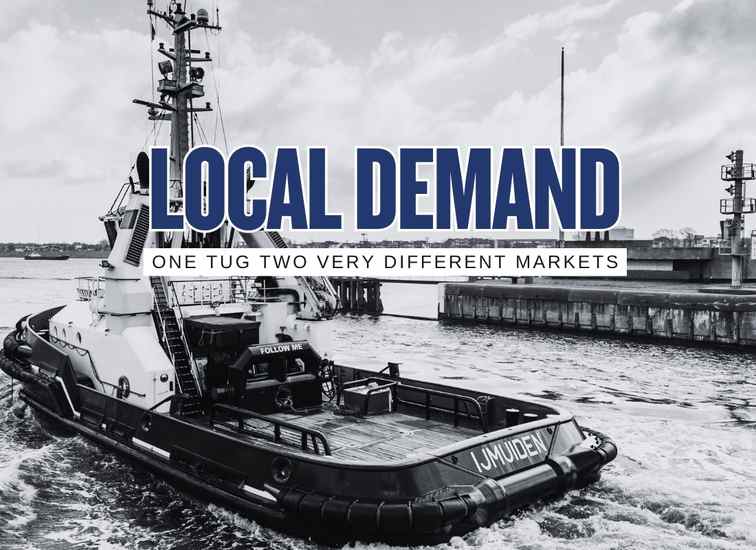
A tug’s value is rarely fixed. The same boat can be booked constantly in one harbor and spend too much time waiting in another because tug demand is shaped by the local job mix, not just horsepower or bollard pull. Real port rules show this clearly. In Sydney and Port Botany, tug requirements change with vessel length, displacement, wind gusts, and whether the ship has an approved bow thruster, with some smaller departures needing no tug while larger or windier cases require multiple tugs. Newcastle’s guidance also changes tug use based on thrusters and whether it is a vessel’s first visit or a later approved visit. At LNG Canada’s Kitimat terminal, every LNG carrier is escorted and also assisted by three harbor tugs for berthing, which creates a very different utilization profile from a simpler general cargo port. In LA/Long Beach, official harbor guidance also notes that ship beam, hull flare, current, tides, and escort rules affect what tug types and power are most effective.
A tug is only as valuable as the port around it
Owners sometimes look at a tug as if its commercial strength travels intact from one market to the next. In practice, port demand is built around vessel mix, escort rules, berth geometry, weather exposure, terminal risk, traffic peaks, pilot preferences, and local operating windows. That is why a tug that looks like a perfect asset on paper can earn strongly in one harbor and feel oversized or underused in another.
The core idea
A port does not buy tug capability in the abstract. It buys a response to local operating problems. If the local problem is large tanker escort through exposed water, indirect braking force and escort readiness become valuable. If the local problem is short, low-complexity berthings for smaller ships with thrusters, a very powerful escort-oriented tug can spend too much time idle. Commercial performance follows local friction points.
10 reasons the same tug wins in one port and struggles in another
The ship mix is completely different
A tug built around escort work, high indirect forces, or frequent large-ship assists needs a port that actually handles those ships often enough. A harbor dominated by feeders, coastal ships, small tankers, inland traffic, or vessels with strong thrusters will not consume that capability at the same rate. The tug may still be good, but too much of its design value goes unused.
Local rules create or remove baseline demand
Some ports and terminals make towage demand far more predictable through published matrices, escort obligations, or terminal-specific minimums. Others leave more room for case-by-case reduction. When minimum tug packages are built into local practice, utilization becomes steadier. When towage is reduced whenever conditions allow, demand can thin out quickly.
Berth geometry changes the job more than owners expect
Long straight berths with generous turning basins and simple approaches do not consume tug power the same way as tight basins, river bends, limited swing room, dolphin berths, crosswinds on exposed approaches, or terminals where ships must be controlled precisely near infrastructure. The harder the final maneuver, the more tug capability turns into billable necessity.
Wind current tide and shallow water amplify local need
Environmental difficulty is one of the fastest ways to change tug value. Two ports can handle similar ship sizes, yet the one with stronger crosswinds, tighter current windows, more pronounced tidal influence, or greater shallow-water handling penalties will support more tug use and less tug reduction. A tug that feels oversized in a sheltered harbor may feel exactly right in an exposed one.
Thruster-friendly vessels can erase part of the demand
Modern shipboard bow and stern thrusters do not remove tug demand everywhere, but in many berth scenarios they reduce it. That matters a lot in ports where authorities recognize approved thruster capability in their tug tables. A tug fleet positioned around heavy assist demand can see utilization fall if the local vessel population increasingly arrives with handling aids that are accepted operationally.
Escort specialization only pays where escort work is routine
Escort-ready tugs earn their keep in ports with tanker, LNG, or other high-consequence movements that demand escort capability. In a general cargo port with simpler harbor assist jobs, the extra escort performance can be commercially under-monetized. Owners then discover that a premium tug specification did not travel well because the destination port does not price that edge every day.
Terminal economics can support dedicated tug packages in one place and not another
High-value terminals with strict safety and schedule discipline often justify dedicated tugs, line handling coordination, standby capacity, and tighter service standards. A more price-sensitive port may prefer leaner arrangements and fewer idle reserve hours. The same tug can be commercially prized where delay costs are high, yet look expensive where berth economics are less demanding.
Traffic peaks and port rhythm decide whether the tug stays busy
Some ports have dense, repeatable call patterns that keep tug rosters moving from job to job. Others are spikier, with idle gaps between arrivals. A tug does not need constant demand in theory. It needs enough clustered demand to convert readiness into revenue. Ports with weak traffic rhythm often make good tugs look underutilized simply because jobs do not stack efficiently.
Pilot preferences and local operating culture matter
Towage demand is not produced only by vessel data. It is also shaped by local pilotage norms, harbor master conservatism, route familiarity, first-call treatment, and how much flexibility exists in live operations. In some ports a strong tug culture is embedded in the operating system. In others the culture leans toward reducing tug numbers whenever conditions and ship capability allow.
Commercial structure can hide or unlock utilization
A tug on a portwide concession, terminal contract, or bundled escort agreement may post healthy use because demand is captured structurally. The same tug exposed to a thinner spot market can look underworked. This is why owners should judge a tug against the local contracting model, response-time obligations, reserve expectations, and competitive setup, not just the physical port profile.
Same tug different outcome
The table below shows how identical hardware can deliver very different commercial results depending on the surrounding port system.
| Port setup | Why the tug is valuable | Why the same tug might be underused elsewhere |
|---|---|---|
| Large tanker or LNG port with routine escort work | Escort capability, high braking force, firefighting readiness, and strict terminal procedures convert directly into frequent assignments and premium relevance. | A simpler harbor with little escort work may only use a fraction of that specialized capability. |
| Container port with bigger ships and weather exposure | Large windage profiles, tight berthing windows, and schedule pressure reward fast response and strong maneuvering support. | A calmer port with smaller ships and wider basins can often reduce tug numbers or tug power. |
| Bulk port with dense repeat calls and narrow operational windows | Regular traffic creates strong fleet rhythm and higher utilization across shifts. | An irregular-call port leaves the tug waiting between jobs even if each job is important. |
| Berth with difficult approach geometry | Tug precision becomes central to safe, repeatable berthing and unberthing. | An easier berth layout reduces the need to pay for top-end maneuvering capability on every move. |
| Port with published conservative towage matrices | Minimum tug packages create dependable baseline demand. | A port with broad discretion for reductions may cut tug use whenever ships have thrusters or weather is favorable. |
| Terminal with dedicated support package | Escort, harbor assist, line handling, and standby functions can all support consistent revenue. | Without terminal-backed packages, the tug competes for fewer and more variable jobs. |
A mistake buyers make too often
They buy tug capability as if every port pays for the same problem set. It does not. The better question is not “Is this a strong tug?” It is “Which local bottlenecks does this tug solve often enough to stay busy?” That shift in thinking usually leads to better fleet deployment decisions, smarter charter positioning, and fewer surprises after delivery or relocation.
A practical lens for evaluating port fit
- Check the local vessel ladder. Look at call frequency by ship type, not just peak vessel size.
- Study berth and approach complexity. Turning basin limits, crosswind exposure, river bends, and shallow-water penalties often matter as much as bollard pull.
- Review local tug matrices and terminal manuals. Published rules can tell you whether demand is structural or discretionary.
- Separate escort value from harbor-assist value. A tug designed to excel in one does not always monetize equally in the other.
- Measure traffic rhythm. A port with clustered jobs can outperform a larger port with irregular demand.
- Price the reserve obligation. Standby readiness may be commercially valuable even when the tug is not physically towing.
Port fit scorecard
Use this simple estimator to judge whether a tug is likely to be heavily used, moderately used, or underused in a target port. It is not a substitute for local pilot and terminal review, but it is a useful first commercial screen.
This port has some drivers of tug demand, but not enough yet to confidently say a premium tug will stay very busy.