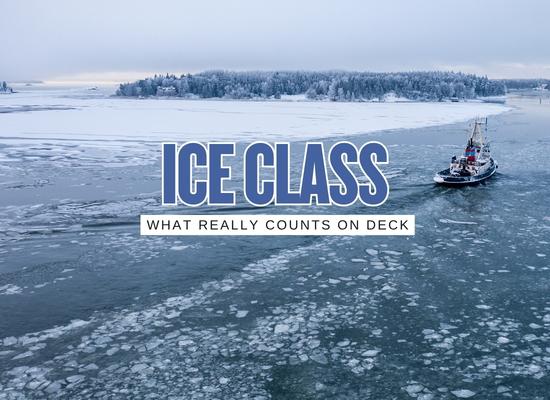
An ice-class tug is not just a standard harbor tug with thicker steel and a winter paint job. Once a tug is expected to work in ice, the real design priorities shift toward hull and appendage protection, propulsion survival, cold-weather operability, deck safety under icing, reliable seawater and engine performance in freezing conditions, and a layout that still lets crews work when visibility, traction, and access are all worse than normal. Class and regulatory guidance make that clear: ice capability depends on more than hull strengthening alone, and cold-climate operation pulls machinery, steering gear, fire systems, deck equipment, and crew access into the design equation too.
2. Bow, shoulder, and hull-zone strengthening that matches contact reality
3. Propulsion and appendage protection that can survive ice contact
4. Reliable steering response in cold and broken-ice conditions
5. Sea suction, cooling, and machinery arrangements that keep running in freezing weather
6. Deck equipment that still works when ice builds up
7. Winterization of exposed systems, access routes, and safety gear
8. Fendering and contact geometry that remain useful around ice and ships
9. Layout and traction choices that help crews actually work outside
One of the biggest mistakes in ice-class buying is assuming that any ice notation automatically means the tug is suitable for the intended winter service. It might not. Some rule frameworks are built around merchant-ship operation with icebreaker assistance available, not around independent tug work in all conditions. That means the class label is only the starting point.
Buyers need to ask what the notation assumes about route, assistance, ice thickness, speed, and exposure. A tug working short terminal jobs in assisted Baltic winter conditions is not the same design problem as a tug expected to operate more independently in harsher ice.
In ice service, the more useful question is not “Is the hull stronger?” but “Which zones are strengthened, and for what kind of contact?” Ice loads are localized. Bow, shoulders, waterline regions, and other impact areas take repeated punishment. That means well-targeted strengthening and scantling choices matter more than a vague claim of being robust.
For tugs, that is especially important because they are not just moving through ice. They may also be maneuvering close to ships, pushing, towing, and repositioning in broken ice and slush where contact patterns are messy and repetitive.
Ice work can expose propeller blades, shafts, nozzles, and steering equipment to loads that open-water tug buyers rarely think much about. In harsher ice, appendage survival becomes central. A tug with impressive installed power can lose a lot of its real value if its propulsion line is not protected and classed for the actual loads it may see.
This is why ice-capable propulsion packages deserve separate scrutiny. The tug needs not only thrust, but the ability to keep producing and directing that thrust after repeated contact with ice.
A tug can be structurally ice-capable and still suffer operational trouble if its machinery support systems are weak in freezing conditions. Ice ingestion into seawater systems, freezing temperatures affecting exposed machinery, and inadequate protection for combustion-air arrangements can all become winter reliability problems.
These are the kinds of features that tend not to dominate brochures, but they matter greatly once the tug is expected to stay available through prolonged cold-weather service.
In winter service, the question is not only whether deck equipment is strong enough. It is whether it drains, sheds ice, remains accessible, and continues working when freezing spray or accumulation begins to interfere. Tug operations slow down fast if deck gear becomes hard to use safely.
That makes cold-weather deck operability a core buying issue rather than a minor outfitting choice.
A serious winterization package reaches across materials, coatings, deck equipment, machinery, safety systems, communication gear, access routes, and even the way people operate the tug while wearing bulky cold-weather gear. In other words, winter capability is not one item in the spec. It is an operating condition that touches a lot of items at once.
The most convincing ice-class tugs are the ones where winterization looks integrated into the vessel rather than added as an afterthought.
Tug designers spend a lot of effort on contact geometry for shiphandling, but in winter the tug may also be working in broken ice while trying to stay useful against the ship. That means the bow form, shoulders, fender placement, and general working geometry need to support real push work and remain sensible in harsher conditions.
A tug that performs beautifully in open-water contact can feel far less comfortable once ice starts complicating the same job.
This quick tool helps identify whether an ice-class tug spec looks more like a basic assisted-winter design, a balanced ice-work design, or a more robust high-demand winter package.