HaiSea’s three-vessel expansion points to a bigger North Coast towage buildout
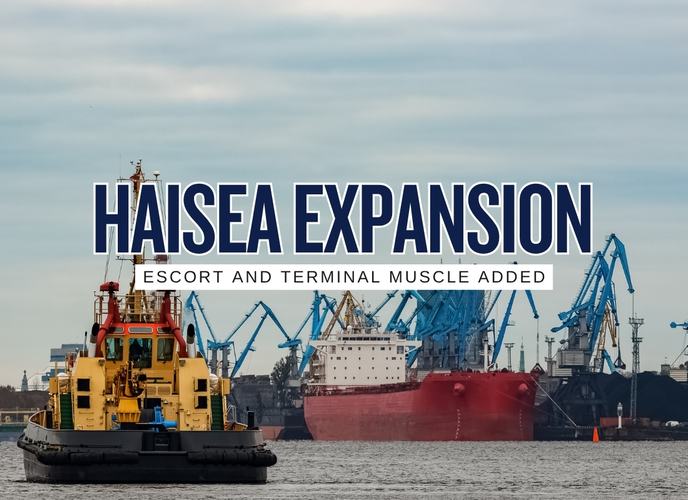
HaiSea Marine is adding one heavy escort tug and two terminal tugboats for British Columbia’s North Coast. The order matters because it is not a routine harbor refresh. It expands a fleet built around long-distance LNG carrier escort, terminal berthing, Indigenous-majority ownership, low-emission operations, and high-reliability towage for one of Canada’s most important export corridors.
New tugboats ordered: one escort tug and two terminal tugboats for BC’s North Coast.
Reported bollard pull for the new Sanmar-built RAstar 4000 series escort tug.
Reported bollard pull for each of the two Damen ASD 2813 terminal tugboats.
Approximate escort distance from the Triple Island pilot station area to Kitimat through Douglas Channel.
Potential annual LNG carrier ship-assist and escort volume cited by HaiSea over the term of its LNG Canada contract.
Sources: MarineLink, HaiSea Marine operations, HaiSea Marine vessels, HaiSea Marine.
The order adds capacity to an already unusual tug platform
HaiSea is not starting from a conventional harbor fleet. Its existing platform already combines battery-electric harbor tugs with LNG dual-fuel escort tugs. The company says its fleet includes Canada’s first electric tugboats, three ElectRA 2800 electric harbor tugs, and two RAstar 4000-DF escort tugs that can operate on LNG and diesel. That is a highly specific setup built around LNG carrier safety, berthing control, environmental expectations, and long-distance escort service.
The new order strengthens that model. One additional high-power escort tug adds redundancy and route resilience. Two additional terminal tugs add harbor flexibility, berthing capacity, and support depth at a terminal environment where ship movements must be precise, heavily planned, and available in difficult weather.
| New vessel | Builder | Key specification | Strategic role |
|---|---|---|---|
| Escort tug | Sanmar Shipyards | RAstar 4000 series variant, 40.2 m overall length, 100 tons bollard pull, 14.5-knot full speed. | Long-distance escort, LNG carrier safety margin, route redundancy, and high-power marine assurance. |
| Terminal tug 1 | Damen Shipyards Group | ASD 2813, 27.59 m overall length, up to 70 tonnes bollard pull, winterization package, firefighting capability. | Berthing, terminal maneuvering, ship-assist reliability, and cold-region operational support. |
| Terminal tug 2 | Damen Shipyards Group | ASD 2813, matching terminal tug package, built at Damen Song Cam Shipyard in Vietnam. | Fleet depth, maintenance coverage, simultaneous movement flexibility, and terminal standby capacity. |
Commercial signal
The order suggests LNG towage is moving toward purpose-built fleet ecosystems. The value is not only the tug. It is the full operating package: escort capability, berthing support, shore-side base, trained crews, emissions profile, winterization, firefighting, and enough redundancy to support repeat carrier movements.
The operating chain behind the headline
7 signals tug operators should take from the order
① LNG towage is becoming a specialized service package
LNG carrier support is not ordinary harbor assist. It requires high reliability, safe escort procedures, terminal coordination, emergency readiness, trained crews, and equipment matched to the route. HaiSea’s expansion reinforces the idea that LNG towage is increasingly sold as a full service system rather than a spot tug assignment.
② Escort redundancy is becoming easier to justify
A 100-ton escort tug is a major asset, but the more important word may be redundancy. Long-route LNG escort work can expose an operator to weather, mechanical downtime, crew scheduling, maintenance windows, and high customer expectations. One additional escort tug can protect the whole service model.
③ Terminal tugs still matter in the clean-fleet conversation
Electric and LNG dual-fuel escort tugs get much of the attention, but terminal tugs are the workhorses that protect berth operations. The two Damen ASD 2813 orders show that terminal reliability remains central even in a low-emission fleet story.
④ Winterization is a strategic specification, not a detail
The Damen terminal tugs are reported with a winterization package. For northern operations, that matters. Cold-region tug performance involves deck safety, crew comfort, equipment protection, firefighting readiness, visibility, and reliable starts in difficult conditions.
⑤ Indigenous-majority maritime ownership is part of the story
HaiSea Marine is majority owned by the Haisla Nation in partnership with Seaspan. That gives this expansion a commercial and regional development dimension beyond vessel procurement. The order is tied to local maritime employment, training, procurement opportunity, and long-term participation in a major export corridor.
⑥ Global builders are competing inside one fleet strategy
The new order splits major work between Sanmar and Damen, while the designs connect back to Robert Allan’s escort platform and Damen’s ASD terminal tug line. That shows how modern towage fleets can combine multiple builders, designers, and construction locations while still serving one integrated operating mission.
⑦ LNG growth can create repeat tug demand beyond the first terminal package
The first dedicated fleet may only be the start. If LNG carrier volumes grow, if service reliability targets tighten, or if future phases and related export projects move ahead, tug operators may need more escort, harbor, standby, maintenance, and emergency capacity.
Stakeholder impact strip
For tug owners
High Fleet depth Energy terminal workThe order reinforces the value of dedicated fleets for LNG and high-spec terminal work. Owners should watch how escort redundancy and terminal tug depth are priced into long-term service models.
For shipbuilders
High Sanmar DamenThe order shows continued demand for proven designs with regional customization. Builders that can provide reliable delivery, support, and mission-specific packages remain well positioned.
For LNG terminals
High Uptime Marine assuranceDedicated tug ecosystems can become part of the terminal’s reliability case. The tug fleet is not a peripheral service when export schedules, safety margins, and public confidence are on the line.
For ports and regulators
Medium Safety EmissionsThe expansion shows how clean-fleet goals, marine safety, and terminal capacity can be connected in one procurement model. It may become a useful reference point for other energy ports.
LNG tug readiness score
This quick planning tool estimates whether a tug fleet is positioned for LNG terminal support. It is designed for strategic review, not engineering approval.