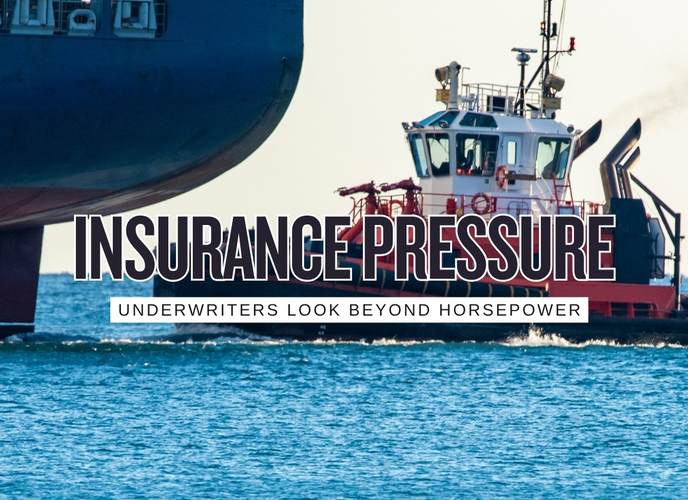
Underwriters price the tug, the job and the waterway together
Tugboat insurance costs change when age, horsepower and route change because those three items alter the real loss picture. Age can point to machinery fatigue, steel condition and maintenance quality. Horsepower can point to larger jobs, heavier forces and more expensive equipment. Route can change collision exposure, weather, current, salvage access, crew requirements, navigation limits and liability severity.
Hull and machinery coverage responds to physical damage to the tug and its machinery, subject to policy terms, valuation, exclusions and deductibles.
Protection and indemnity coverage responds to legal liability exposures such as injury, property damage, pollution and other maritime liabilities.
Navigation limits and operating geography can materially affect coverage, pricing and claims response.
Certificate of Inspection limits, manning, route and operating conditions can influence how underwriters view the vessel’s actual work profile.
Sources: WTW marine hull and liability outlook, The Swedish Club 2026 H&M terms, Travelers commercial hull and P&I, Gard H&M and P&I interface, 46 CFR Part 15 manning rules, 46 CFR Subchapter M towing vessels.
Insurance pricing starts with the work profile
Tugboat insurance is not priced like a simple recreational boat policy. The underwriter wants to understand the vessel, the owner, the job, the crew, the route, the tow, the contract, the maintenance history and the worst credible loss. Two tugs with the same age and horsepower can receive very different treatment if one works a protected harbor with clean loss records and the other handles exposed coastal tows with limited documentation.
Age, horsepower and route are useful shortcuts, but they are not the whole story. Underwriters often care just as much about management discipline: maintenance logs, survey quality, crew training, claims handling, safety management, navigation controls, towing contracts, COI status and whether the owner can explain the risk before a claim forces the explanation.
Three cost centers behind the quote
9 insurance levers that change with age, horsepower and route
Age changes the machinery conversation
Older tugs are not automatically bad risks, but age makes documentation more important. Underwriters want to know whether the vessel has been maintained, repowered, drydocked, surveyed and operated consistently. A well-kept older tug with fresh records can be easier to place than a newer boat with unclear maintenance history.
Machinery age can affect deductibles, exclusions, survey requirements, valuation, and the underwriter’s willingness to cover certain types of breakdown or consequential damage. The bigger concern is not the calendar age alone. It is the gap between age and evidence.
Hull value affects both premium and claim expectations
Hull premium usually tracks insured value, but tug valuation is not always simple. A vessel’s market value, replacement cost, book value, financed value and earning value can all differ. If the insured value is too high, the owner may overpay. If it is too low, the claim outcome may not support replacement or repair.
Older tugs can also create a valuation argument because a well-maintained working tug may be worth more than a generic age-based estimate. Documentation helps the owner defend the number.
Horsepower points to job severity
Higher horsepower can mean a more capable tug, but it can also signal larger vessels, heavier tows, higher forces, more expensive propulsion systems and more severe potential losses. A 6,000-hp tug is not only more powerful. It may be tied to larger contracts, bigger customers, tougher operating windows and higher third-party exposure.
Underwriters will often ask whether the horsepower matches the work. Overpowered for simple work may not be a major concern, but high horsepower used in difficult tows, escorts or exposed conditions needs stronger crew, gear and contract discipline.
Route changes the loss environment
A protected harbor, inland river, Gulf Intracoastal run, exposed coastal tow, offshore support route and international voyage are different risk environments. Route affects weather exposure, traffic density, current, shoaling, bridges, lock delays, salvage access, crew fatigue and emergency response options.
Navigation limits are not casual language. They define the geographic boundaries of the policy. If a tug works outside its agreed limits, coverage can become disputed or unavailable depending on the policy and circumstances.
Towing contracts can shift liability pressure
Tug work creates contract risk. Towage agreements, indemnity language, knock-for-knock terms, pollution responsibility, cargo exposure, salvage clauses, terminal rules and customer requirements can all affect how insurers view the account.
Tower’s liability is especially important because tug operations involve responsibility for third-party vessels or barges under tow. If the coverage does not match the contract, the owner may discover the gap at the worst time.
Claims history can outweigh the vessel profile
A clean loss history is one of the strongest tools an operator can bring to renewal. A difficult loss history does not always prevent coverage, but it changes the conversation. Underwriters want to know whether claims were random, repeated, operational, maintenance-related, crew-related or tied to one customer or route.
The best operators do not simply report that claims are closed. They show corrective actions: training changes, equipment upgrades, route controls, maintenance fixes, dispatch improvements and crew briefings.
Crew quality affects liability and machinery risk
Tug insurance is not only about steel. Crew experience, credentialing, local knowledge, fatigue management, training, turnover and safety culture all affect risk. A strong crew can prevent a small equipment issue from becoming a large claim.
Route-specific experience matters too. U.S. manning rules recognize route familiarity for towing vessel officers in certain operations, and underwriters often want comfort that the crew understands local hazards.
Compliance quality can improve the underwriting story
Subchapter M, COI status, TSMS or Coast Guard inspection path, deficiencies, manning, safety equipment, navigation gear, lifesaving gear, firefighting systems and maintenance programs all influence the risk file. Compliance does not guarantee a lower premium, but weak compliance almost always creates friction.
A tug with a current COI, closed deficiencies, organized records and a clear safety management culture gives the underwriter fewer reasons to hesitate.
Repair inflation and parts access change deductibles
Even when rates soften, underwriters still care about claim severity. Z-drives, electronics, engines, steering systems, shafts, nozzles, gearboxes and specialized yard work can be expensive. If parts are hard to source or repairs require a limited number of yards, the loss can grow quickly.
This matters most for older tugs with obsolete equipment and newer tugs with expensive integrated systems. Both can be good risks, but each needs a different repair-plan story.
The quote improves when the file improves
Tug owners cannot control every market condition, but they can control the quality of the submission. A clean renewal file with vessel details, route map, contract profile, claims response, survey status, crew records and maintenance evidence gives the broker more to work with and gives the underwriter fewer unanswered questions.
Insurance pressure by operation type
Harbor assist
Collision Pier damage Traffic densityHarbor tugs may stay within a tight area, but the liability severity can be high because they work near ships, terminals, pilots, berth windows, cranes, docks and other harbor traffic.
Inland towing
Bridges Locks River stagesInland operators face route familiarity, bridge transit, lock delay, current, barge-breakaway, crew fatigue and cargo exposure. Loss frequency can matter as much as single-event severity.
Coastal towing
Weather Tow loss Salvage accessCoastal routes can expand weather and tow-loss exposure. Underwriters may ask more questions about tow planning, weather windows, emergency gear, crew rest and navigation limits.
Energy and terminal work
High value Standby Contract termsLNG, refinery, petrochemical and industrial terminals can bring strong revenue, but they also bring contract scrutiny, safety procedures, pollution exposure and customer-specific insurance requirements.
Cost levers underwriters commonly separate
| Cost lever | Lower pressure profile | Higher pressure profile | Owner documentation that helps |
|---|---|---|---|
| Age | Older but well surveyed, repowered, drydocked and documented. | Older with sparse records, open survey items or unknown machinery condition. | Survey responses, repair invoices, oil analysis, engine history, drydock photos. |
| Horsepower | Power level matches controlled work and experienced crews. | High horsepower paired with heavy tows, exposed routes or weak gear records. | Work profile, tow plan, gear certificates, crew training, bollard pull evidence. |
| Route | Clear operating area, protected waters and policy limits that match real activity. | Route creep, exposed weather, international exposure or unclear navigation limits. | Route map, seasonal plan, delivery voyage notice, navigation limit confirmation. |
| Claims | Clean or improving loss history with corrective actions. | Repeated similar losses or unexplained incidents. | Loss runs, corrective action memo, training updates, maintenance fixes. |
| Management | Organized safety, maintenance, compliance and crew systems. | Informal records, scattered files or unclear accountability. | Safety manual, maintenance schedule, compliance file, crew matrix. |
Tugboat insurance pressure estimator
This tool estimates insurance pressure from age, horsepower, route, claims, compliance and contract exposure. It does not calculate a real premium. It helps owners identify the areas most likely to drive pricing or underwriting questions.
Underwriting pressure bar
Build a clear renewal package, but pressure appears manageable if records are complete.