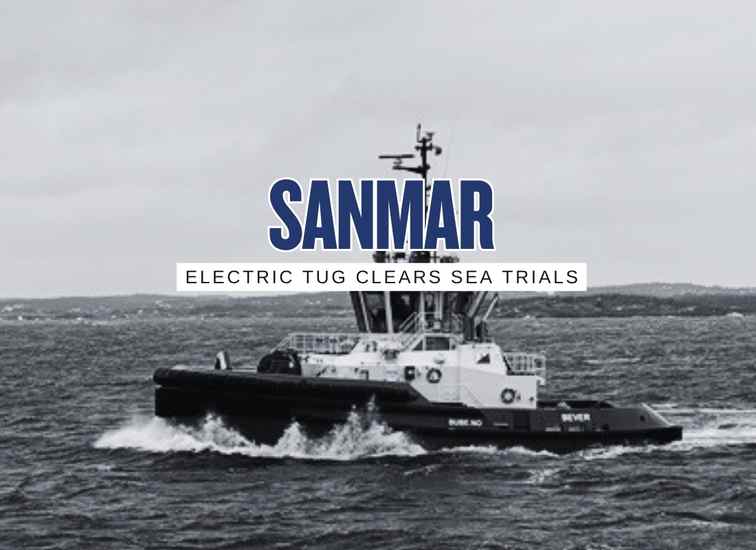
Ports and tug operators are finally getting enough real-world signal to compare methanol tug projects and battery-electric tugs as practical deployment paths rather than as abstract decarbonization ideas. The current evidence suggests that battery-electric tugs often look more practical first in ports with short, repeatable duty cycles and strong charging plans, while methanol projects look more practical first in ports that want longer endurance, greater operational flexibility, and a cleaner-fuel pathway without relying so heavily on shore charging. Recent 2026 activity makes that split easier to see: Svitzer Balder is moving toward service in Gothenburg as the world’s first battery-methanol harbour tug, while fully electric tug deployments and orders in Singapore, India, and other markets show that pure battery-electric towage is no longer confined to one-off theory.
• tug jobs are short-cycle and predictable
• shore charging can be built into the work pattern
• the port wants zero direct harbor emissions
• local air-quality pressure is high
Methanol usually looks more practical first when
• endurance and assignment flexibility matter more
• the port already sees methanol as part of its fuel strategy
• charging constraints are harder to solve quickly
• tug operators want a cleaner-fuel step without relying on return-to-base charging
The strongest practical case for battery-electric tugs appears in ports where work is short-cycle, repetitive, and close enough to base that charging can become part of normal vessel rhythm. That is why battery-electric traction is gaining real traction in ports such as Singapore and in Indian green-tug orders. Singapore’s first fully electric tug was commissioned in January 2026 for deployment in April, and Polestar Maritime’s January 2026 order with Cochin Shipyard covers two 60-ton bollard-pull battery-electric tugs for Jawaharlal Nehru Port under India’s Green Tug Transition Programme.
Battery-electric also has a sharp message for ports trying to cut local emissions quickly. When the port can deliver charging reliably, the tug’s harbor operations can be direct-emissions free. That is a very strong advantage in ports that are under pressure to reduce local air pollution as well as carbon intensity.
Methanol’s practical advantage is different. It becomes more attractive first in ports that want a lower-emission tug path without making the tug depend so completely on return-to-base charging windows. Svitzer’s Gothenburg project is the clearest current signal. Svitzer Balder combines a large battery system with methanol engines and a diesel range-extender, and Svitzer has explicitly tied Gothenburg to both charging opportunities and methanol bunkering availability.
That mix matters because it suggests methanol is being used not merely as a symbolic fuel, but as part of a flexibility solution. A methanol-capable tug can keep a cleaner-fuel story while reducing the operational constraints that pure battery-electric systems may face in more variable or endurance-heavy assignments.
One reason battery-electric can look more practical first is that some ports are prepared to redesign tug operations around it. Charging windows, return-to-base patterns, and cleaner electrical infrastructure can be built into dispatch planning if the tug jobs are predictable enough. That is part of the logic behind Svitzer’s separate agreement with Cochin Shipyard for multiple battery-electric TRAnsverse 2600E tugs and behind India’s GTTP-backed battery-electric orders.
In those conditions, battery-electric does not look like a compromise. It looks like the cleanest operational answer, provided the duty cycle really fits.
Methanol projects carry a different strategic value. They do not just decarbonize one tug. They help a port demonstrate readiness for a broader methanol-fuel ecosystem around ships, terminals, and bunkering services. Gothenburg and Antwerp both matter here. Gothenburg has been positioned by Svitzer and Riviera as a port with both methanol bunkering experience and charging opportunities, while Antwerp’s Methatug conversion showed a methanol tug could store enough fuel for roughly two weeks of tug work.
That gives methanol a practical edge in ports that want flexibility and future-fuel signaling at the same time, even if the direct harbor-emissions story is less clean than a pure battery-electric tug charged from green power.
Looking across current projects, battery-electric appears to have the cleaner near-term practicality story in more ports because it already has visible deployment momentum in short-cycle harbor service and does not require a port to establish an entirely new liquid-fuel bunkering story. The tug still needs charging infrastructure, but that can align with wider port electrification goals.
Methanol may still win first in ports that prioritize endurance, future-fuel branding, and tug flexibility over absolute harbor zero-emission performance. That is why the practical answer is not one global winner. It is a port-by-port split.
This quick screen estimates whether a port profile leans more toward battery-electric first or methanol first.
Near zero = close call, port-specific details decide it
Positive score = methanol first looks more practical